


Stationary Service Versus Total Strategic Loss
Watching a Grand Prix broadcast often directs attention to the lower corner of the screen where stationary tyre-change times flash in bold numbers. When evaluating race strategy, fans frequently wonder why a crew saving half a second in the box does not automatically shift an undercut or decide track position. The reality is that the stationary window measured during service represents only a small slice of a car's overall pit-lane time loss. A complete pit stop requires slowing down to the pit-lane speed limit, traversing the lane, stopping precisely on the marks, and accelerating back up to racing speed.
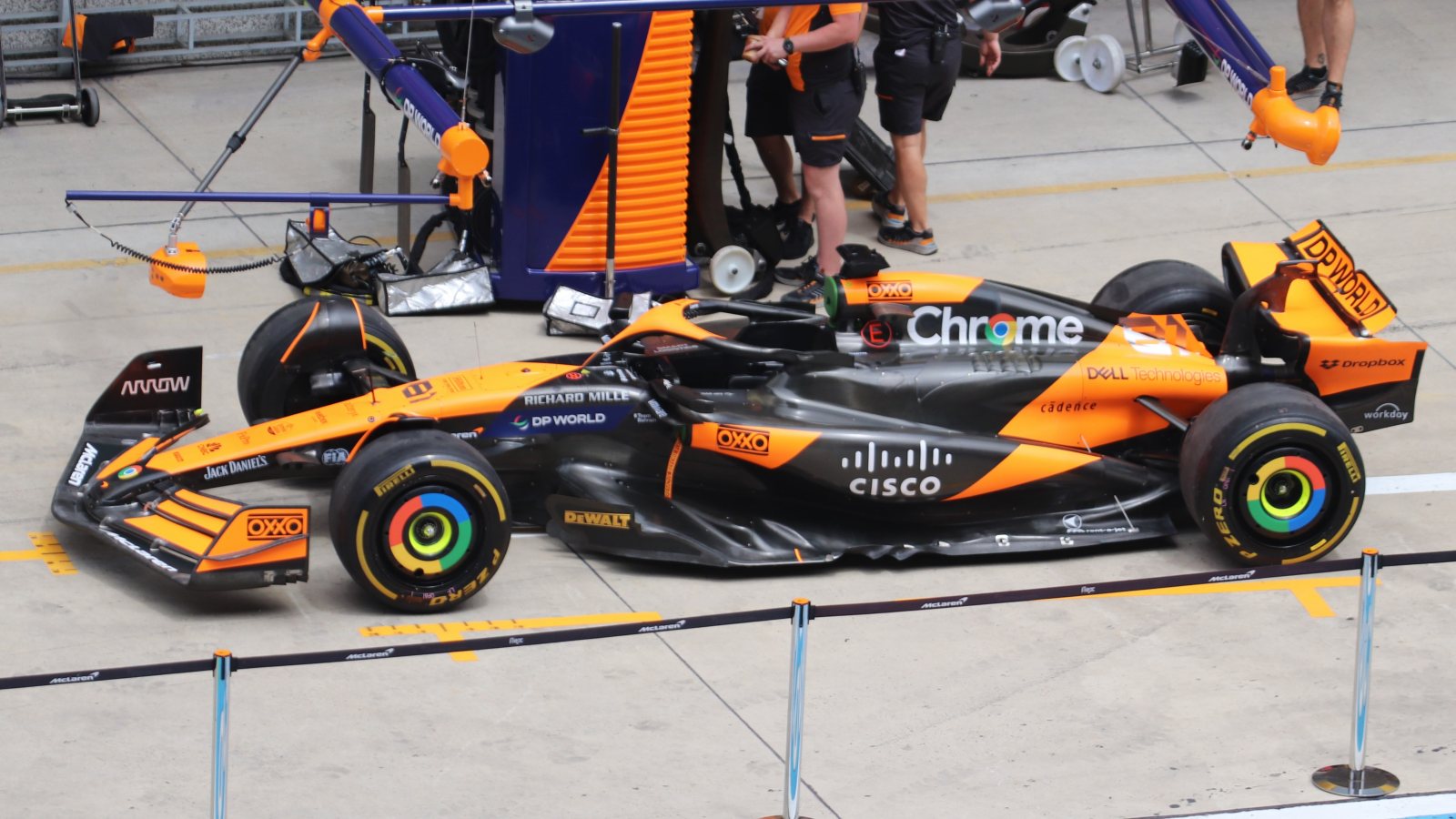
The published stationary numbers highlight peak crew execution rather than overall race time saved. In the 2023 F1 fastest pit stop award results, the fastest single stop recorded across each of the 22 Grands Prix spanned from a 1.80-second benchmark by McLaren in Qatar to a 2.35-second event winner by Ferrari in Mexico. That represents a 0.55-second spread between the extremes of each round's quickest service. However, because overall pit loss also depends heavily on track-specific pit-lane length, entry and exit geometry, speed limits, and traffic, a fraction of a second gained in the box cannot simply be translated into on-track position without accounting for the entire strategic delta.
Peak Times Versus Strategy Reliability
Strategists calculating whether to bring a driver in do not construct plans around an outlier stop. While Red Bull Racing collected nine event-winning times, Ferrari took seven, and McLaren earned six across the 2023 season's 22 races, these award tallies capture strictly the single fastest stop per weekend. They do not record every crew's full race average, routine stops, or costly handling errors such as cross-threaded wheel nuts and delayed releases.
For strategic execution, avoiding a four-second or five-second delay is substantially more valuable than chasing an extra two-tenths of a second at the absolute limit. A team planning an undercut needs a predictable stationary window to beat the rival car's out-lap pace; a single brilliant headline stop cannot prove that every subsequent tyre change during the race delivered the consistency required to protect track position.
Official reference: DHL Fastest Pit Stop results.
0 comments:
Post a Comment