


The Strategic Trade-Off of Early Session Attacks
In MotoGP qualifying sessions where rain threatens or returns, race strategists and riders face an immediate tactical dilemma: push on an imperfect surface to bank a lap before conditions worsen, or build rhythm cautiously. At the 2026 Australian Grand Prix qualifying at Phillip Island, returning rainfall over a damp track elevated the stakes. Committing early risks an immediate lowside, but hesitation risks being caught out if track grip deteriorates further across the short 15-minute window.
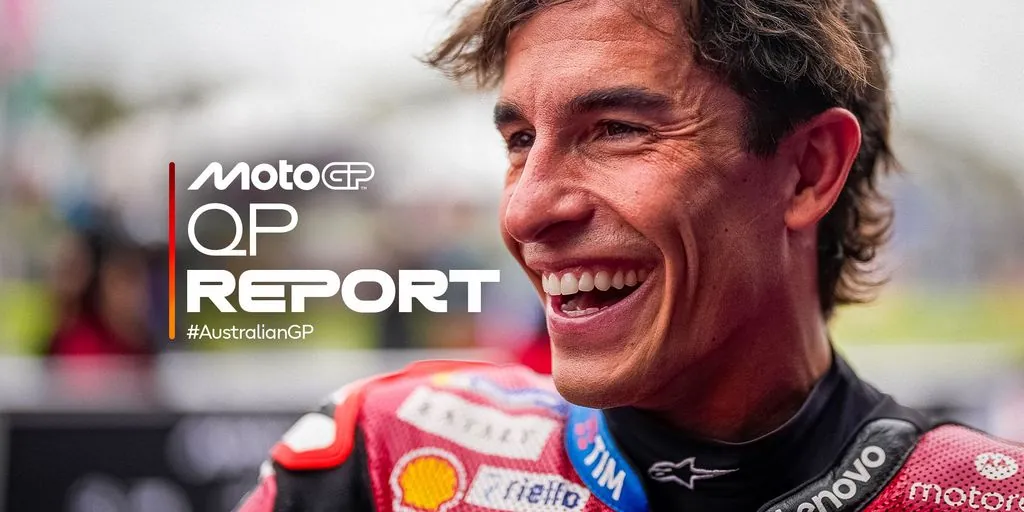
When an incident does occur on an opening run, the operational readiness of the garage dictates whether a rider remains in contention. As demonstrated when Marc Marquez Recovers from Turn 4 Crash to Take Australian GP Pole, sprinting back to pit lane to switch to a prepared spare machine can salvage a session, provided the backup bike is dialed in for the evolving track state and the rider quickly resets their mental reference points.
Timing Runs Against Worsening Track Grip
Rejoining midway through a wet or mixed session requires precise timing. Johann Zarco demonstrated the advantage of continuous track exposure after progressing through Q1, using recent track references to temporarily hold provisional pole with a 1:35.706. However, leaving the decisive effort until the final minutes remains a high-variance gamble. While Marquez answered with an unrepeated 1:34.203 to head Alex Marquez by 1.494 seconds, title contender Jorge Martin spent most of the closing minutes down in tenth before finding enough margin on a final flyer to recover fourth on the grid.
Official reference: Crash to pole: Marc Marquez delivers Q2 showstopper at Phillip Island.
0 comments:
Post a Comment