Saturday, 31 October 2026

How Formula 1 Timetables Balance Track Engineering with Media Obligations in Austin

By: Pete Davidson On: 22:25
  • Share The Gag
  • Editorial illustration of a stylised microphone and speech bubbles for United States GP: Newey, McNish and Budkowski named for Friday press conference

    Fitting Team Leadership Between Crucial Track Sessions

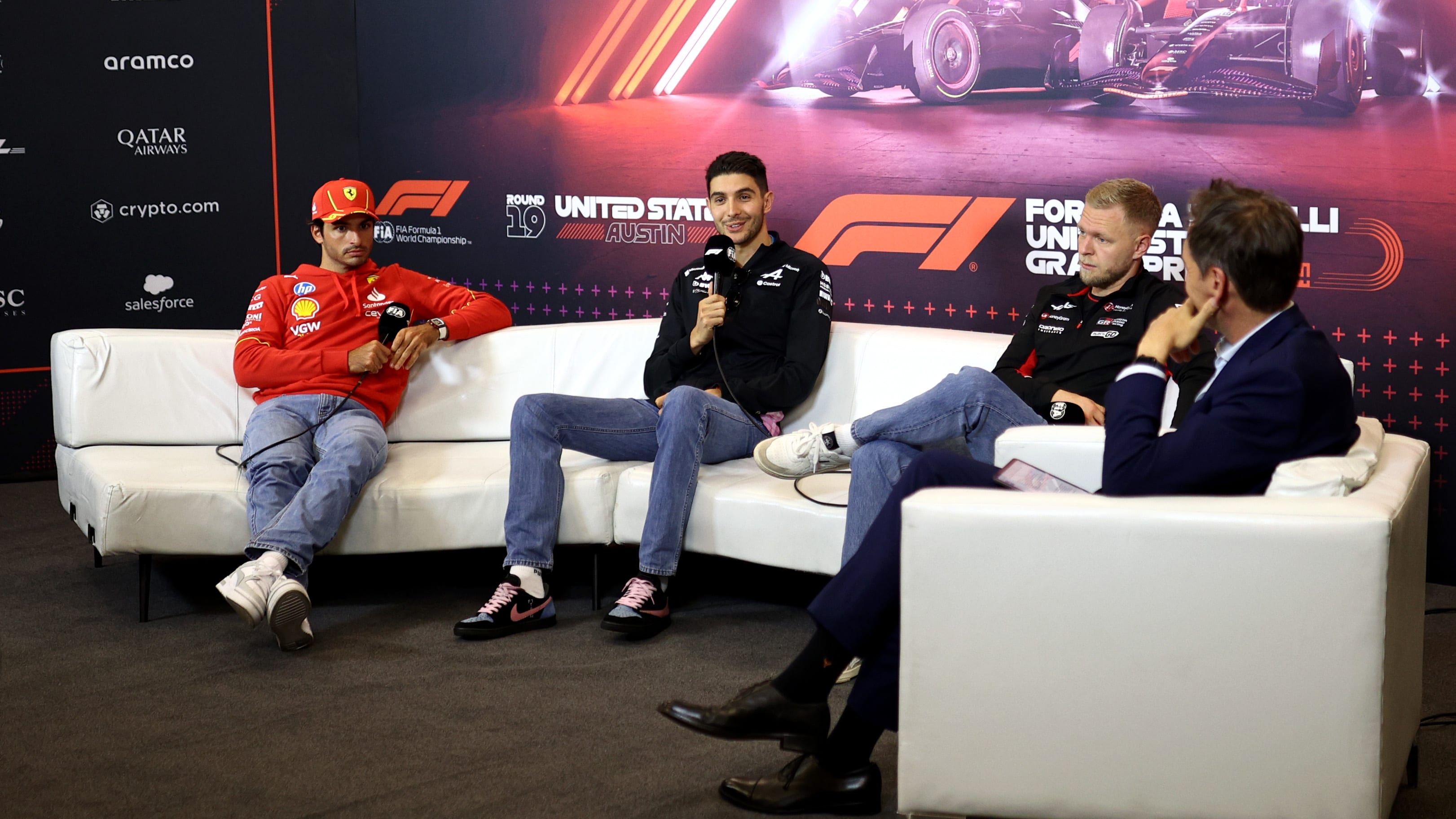
    Formula 1 race weekends require teams to balance rigorous track engineering programmes with formal media commitments mandated by the governing body. During the 2026 United States GP: Newey, McNish and Budkowski appeared on the official FIA schedule to represent Aston Martin, Audi and Cadillac respectively in the Friday team principals and technical personnel conference. This hour-long slot was set for 14:30 local time in Austin, placed neatly between opening practice which concluded at 13:30 and the second session beginning at 16:00.

    For engineers and strategic directors, allocating time away from telemetry debriefs during the middle of Friday requires meticulous garage workflow management. Technical leaders must evaluate setup directions and initial tyre degradation metrics from the opening hour of running, yet attend mandatory 60-minute media briefings before cars return to the circuit for key long-run simulations.

    Results-Driven Weekend Media Schedules

    While Thursday and Friday appearances are determined beforehand, Saturday and Sunday media obligations depend strictly on track outcomes. Following qualifying at Circuit of the Americas, the three fastest drivers are allocated to the official media room, while Sunday mandates an immediate post-race debrief for the top three podium finishers.

    Official reference: FIA's announcement, dated 21 October.
    How MotoGP Restarts Reshuffle the Grid and Pit Lane Strategy

    By: Pete Davidson On: 19:34
  • Share The Gag
  • Editorial illustration showing a red flag on a dark pole within a rounded beige panel, with a MotoGP restart rules title to the right.

    The Lap Thresholds That Dictate Race Resets

    When red flags interrupt a Grand Prix, team pit walls face an immediate strategic calculation based on how many laps the leader officially completed. Under the governing 2026 regulations, completing fewer than three laps voids the opening stint entirely, wiping away early overtakes and resetting the grid back to the original qualifying order for a fresh race reduced by one lap. However, if the leader has logged at least three laps without reaching the rounded-down three-quarters distance mark, the race is suspended rather than scrapped. In that scenario, only classified riders from that initial segment can take the restart, lining up based entirely on the interrupted classification order.

    Pit Lane Requirements and Machine Setup Opportunities

    Red-flag interruptions also prompt high-stakes decisions around machine preparation and equipment recovery. To remain eligible for a restart following three or more completed laps, riders must have been actively competing at the moment of the stoppage and must enter pit lane with their motorcycle within five minutes of the signal. If a rider was one full lap down in the interrupted standings, regulations dictate they must take the restart from pit lane, while anyone two or more laps down is barred from restarting. Because teams are explicitly permitted to repair machines, switch bikes, and refuel before the second segment begins, crews must weigh whether quick setup changes or fresh machinery will offset the sprint-like nature of the shortened remaining distance.

    Points Consequences When Races Cannot Resume

    Strategic priorities can shift dramatically when adverse track conditions threaten whether racing can resume at all. Understanding MotoGP red flag restart rules helps fans evaluate why certain front-runners defend positions aggressively right up to an interruption. If three or more laps were logged but worsening weather halts the event permanently, the interrupted order stands as the final classification. Teams are awarded half points if completed leader laps sit below the rounded-down fifty percent threshold of the original distance, while reaching or crossing that halfway mark awards full championship points without any further racing.

    Official reference: official red flag guide.

    How Yellow Flag Restrictions Shape MotoGP Race Strategy and On-Track Moves

    By: Pete Davidson On: 16:33
  • Share The Gag
  • Illustrated yellow flag on a dark pole in a rounded beige panel, with a heading to the right.

    The Overtaking Ban and the Immediate Give-Back Choice

    Spotting a yellow warning board or waved flag forces a rider into an immediate strategic calculation. Under the FIM regulations, riders must slow down, proceed with caution, and hold position throughout the controlled zone. Crucially, the restriction does not lift merely once a rider clears the crashed bike or debris; the ban remains in effect until the exact point where a green signal is displayed. Committing to an overtake into a braking zone where a warning has just appeared risks unraveling a rider's entire race if race control intervenes.

    When a pass does occur under caution, the offending rider faces an immediate tactical choice under the MotoGP yellow flag overtaking rules. If the rider realizes the error immediately, they can avoid disciplinary action by intentionally conceding the position back to every competitor overtaken before race direction intervenes. Hesitating leaves the sanction entirely in the hands of stewards, as the rule does not define a single fixed penalty type or duration for an illegal overtake.

    Managing Track Position and Penalty Windows

    Yellow flags also introduce operational hurdles for riders already carrying sanctions like a Long Lap penalty. Regulations prohibit serving a Long Lap penalty route if yellow flags are active across the penalty loop. When that designated lane becomes unusable due to trackside hazards, extra laps are added to the rider's compliance window, allowing teams to adjust their pit-board communications and avoid compounding infractions.

    During non-race sessions like practice and warm-up, the strategic focus shifts entirely to clean track execution. Passing an active yellow light panel or flag automatically voids that lap time regardless of whether an overtake took place, preventing riders from setting qualifying benchmarks through hazardous sectors.

    Official reference: danger ahead beside the track.

    How MotoGP Blue Flags Impact Traffic and Race Strategy

    By: Pete Davidson On: 13:33
  • Share The Gag
  • Editorial illustration with a blue flag in a rounded beige panel on the left and a heading on the right.

    Lapping Duties and Pack Tactics

    Managing track position when falling a lap behind introduces delicate tactical dilemmas for backmarkers and leaders alike. Under the MotoGP blue flag rules, a rider being lapped must allow every lapping bike past at the earliest opportunity, rather than yielding only to the race leader. Furthermore, overtakes between members of a lapped pack are expressly prohibited while the blue signal is active. Because the regulatory wording does not mandate a set number of corners or an exact maneuver for stepping aside, front-runners often face uncertain closing speeds, while lapped competitors must carefully time their surrender of the racing line to avoid squandering their own track position.

    Managing Track Position Across Different Sessions

    The obligations tied to the blue flag extend beyond race day to shape weekend planning in practice and qualifying. During free practice, receiving the signal requires a competitor to let faster machinery through and avoid impeding rivals by idling along the optimum line. At pit lane exit, a dedicated signalling post flashes blue to alert blending riders of high-speed track traffic bearing down, placing the onus on the exiting machine to merge safely without disruption.

    The Final Lap Flag Combination

    Strategic confusion occasionally surfaces at the conclusion of a race when leaders catch slower traffic right at the stripe. When backmarkers closely precede the leader on the final lap, marshals display the blue and chequered flags at the finish line simultaneously. In this scenario, the leader takes the win and concludes their run, but the preceding riders have not completed their full race distance and must circulate for one final lap before taking their own chequered flag.

    Official reference: MotoGP’s official flag guide.

    Flag-to-Flag Decisions: How MotoGP Machine Swaps Shape Wet-Weather Strategy

    By: Pete Davidson On: 10:32
  • Share The Gag
  • Editorial illustration with one plain white flag on a dark pole at left and the title “MotoGP white flag bike change rules” at right.

    The Strategic Meaning of the White Flag

    In grand prix motorcycle racing, changing weather shifts the balance between staying on track and losing lap time to pit road. When track conditions transition from dry to wet, Race Direction signals track marshals to wave a plain white flag, officially authorising riders to enter pit lane and swap bikes without interrupting the continuous race. If an event is formally declared wet prior to the start, machine swaps are permitted immediately without waiting for a white flag. Crucially, displaying the flag is an authorisation rather than an order; each competitor must weigh the lost time of a pit-lane ride-through against the deteriorating grip of slick tyres.

    Navigating the MotoGP white flag bike change rules involves calculating the exact lap where dry tyres become unmanageable. Teams relay telemetry and recommendations using physical pit boards and dashboard messages, but the ultimate call rests entirely with the rider on circuit. Swapping is not restricted strictly to switching between dry and rain compounds. Competitors are legally allowed to exchange slicks for slicks or wet tyres for wets, and regulations permit warmers, adjustments, and further swaps as track conditions evolve.

    Pit-Lane Procedures and Release Risks

    Once the decision to pit is made, execution requires strict choreography to avoid losing track position or violating safety guidelines. Teams are restricted to five designated personnel per rider in the working lane, all of whom must wear technical-director-approved helmets. The spare machine must sit in a pre-assigned spot, and the incoming motorcycle must halt in its designated exchange position rather than taking a line behind another team's backup bike.

    Rejoining the race carries significant strategic risk, as the team must assign one specific crew member solely to oversee incoming pit traffic and guarantee a safe release. Riders pulling away from their changeover box are required to yield to any machine already travelling down pit lane. A mistimed pit stop can instantly erase any lap-time advantage gained by changing tyres if an approaching competitor forces a delay in the release box.

    Official reference: MotoGP’s bike-switching guide of 31 January 2025.

    How a Mechanical Warning Flag Affects MotoGP Race Participation

    By: Pete Davidson On: 07:31
  • Share The Gag
  • Editorial illustration of a black flag with an orange disc beside the MotoGP rejoining topic label.

    Immediate Track Exit Versus Pit Lane Arrival

    When marshals display a black flag bearing an orange disc alongside a specific competition number, the targeted rider must pull off the track immediately rather than circulating back to the pit lane at racing speed. Race direction uses this signal when a motorcycle suffers an active mechanical failure capable of endangering the competitor or surrounding riders, such as fluid leaks or loose bodywork.

    This mandate differs sharply from a standard disciplinary black flag, which instructs a competitor to peel into pit lane at the conclusion of their ongoing lap. Because the orange disc addresses an acute safety hazard, the bike cannot remain on the racing line, requiring marshals to display either physical boards or synchronized electronic light panels around the circuit until the rider safely vacates the asphalt.

    Official Clearance Before Re-entering the Race

    From a tactical perspective, seeing this flag does not automatically equate to instant disqualification or an enforced retirement. Under the FIM MotoGP black flag orange disc rejoin rules, teams are permitted to assess and repair the defective machinery, but finishing mechanical work in the garage or paddock does not automatically grant the rider the right to rejoin the track.

    Before any bike can roll back into competition, an official must formally verify the condition of the machine and grant explicit authorization. Without that specific regulatory permission, the competitor remains grounded, creating a delicate strategic balance between rapid repairs in the garage and waiting on mandatory inspection clearance.

    Official reference: official MotoGP guide to flag meanings.

    Timing the Long Lap Penalty: How Yellow Flags Shift MotoGP Race Strategy

    By: Pete Davidson On: 04:30
  • Share The Gag
  • Editorial illustration with one yellow flag on the left and the text “MotoGP long lap penalty under yellow flags” on the right.

    The Compliance Countdown on Track

    When race control issues a penalty detour, the tactical clock begins ticking immediately. The count begins at the rider's first crossing of the finish line following the dashboard signal. Under normal circumstances, a rider facing a single detour has three laps to complete it, while a double penalty demands both routes be cleared across a five-lap window. Choosing exactly when to peel off involves weighing track position, tire temperature, and traffic gaps against the looming threat of escalation, since missing the deadline triggers an upgrade to a double detour or even a pit-lane ride-through.

    Managing Caution Zones and Penalty Extensions

    That tactical calculus changes entirely if an incident occurs near the designated runoff route. A rider cannot serve a MotoGP long lap penalty under yellow flags if those signals cover the penalty area itself, though caution flags situated elsewhere on the track do not block the detour. Because riders are forced to wait while the zone remains active, extra compliance laps are granted to make up for the unusable window, even though the FIM sporting regulations do not detail a precise mathematical formula for calculating how many laps are added.

    Restarts and Unserved Penalties

    Should a red flag disrupt running before a penalty is executed, the strategic carryover depends on how much distance the race leader completed before the stoppage. If the leader achieved three or more laps, any outstanding pre-race penalties roll into the restarted sprint. If the leader covered fewer than three laps, the session is treated as a fresh race where pre-race sanctions reset, though stewards retain the discretion to mandate that infractions committed during the interrupted segment carry forward.

    Official reference: MotoGP’s official flag guide.

    Tracking Real Tyre Age Across Pit Stops and Strategy Calls

    By: Pete Davidson On: 01:30
  • Share The Gag
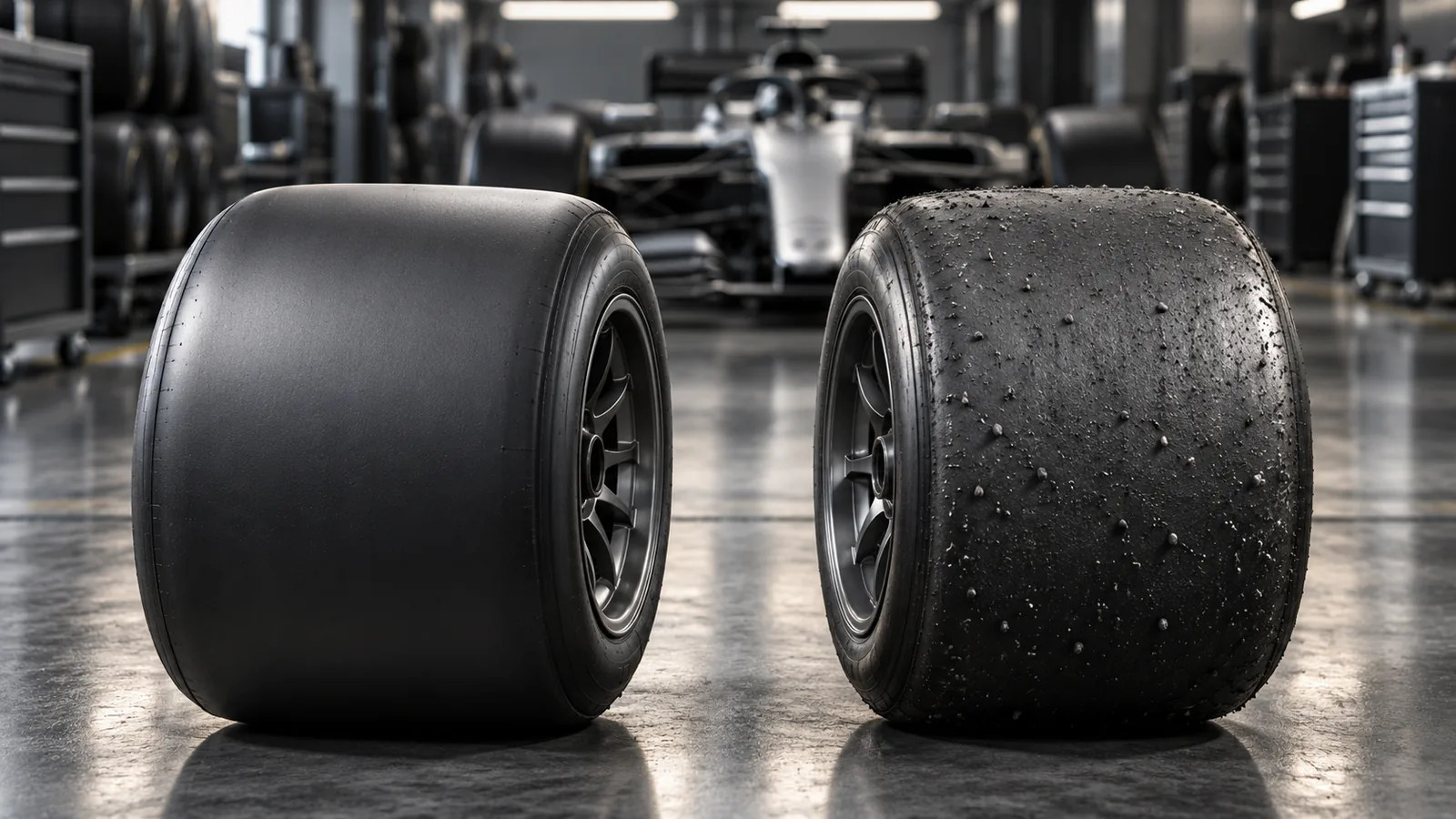
  • Illustration of a fresh racing slick beside a used slick with rubber pickup in a pit garage

    Tyre sets versus stint counters

    Television graphics during a Grand Prix often show stint duration resetting to zero as soon as a car pulls away from the pit box, but that figure only measures the length of the current run. Understanding why F1 tyre age does not reset after a pit stop comes down to distinguishing between a pit lane visit and the physical set of tyres bolted onto the car. Teams often fit scrubbing or lightly run sets preserved from practice or qualifying, meaning the rubber begins its race stint with previous laps already logged on the tread.

    A pit stop can also involve front wing angle adjustments or repairs without changing the tyres at all, leaving the ongoing wear intact. Because broadcast data providers may follow varying counting conventions regarding installation and out-laps, viewers cannot assume that a stop automatically wipes out prior tyre history.

    Evaluating compound requirements and pacing trade-offs

    Formula 1 regulations treat tyre sets, specifications, and regulatory usage as distinct concepts. Article B6.3.2 of the 2026 FIA Sporting Regulations outlines the criteria for when allocated tyres officially count as used, which remains separate from whether the tyre retains competitive grip. Furthermore, swapping between two different used sets of the soft specification does not fulfill the sporting requirement to run distinct dry-weather compounds during a race.

    From a strategic perspective, an older tyre number on the timing screen does not automatically guarantee a slower lap time. Factors such as dropping fuel loads, track rubbering, warm-up phases, and thermal management heavily alter single-lap pace. Surface graining can also temporarily disguise performance before clearing up, meaning strategists must weigh the actual degradation curve against the time lost traveling through the pit lane rather than relying strictly on nominal lap counts.

    Official reference: 2026 FIA Sporting Regulations, Section B, Issue 09.

    Friday, 30 October 2026

    Why Rally Stages Feature Two Separate Finish Lines

    By: Pete Davidson On: 22:29
  • Share The Gag
  • rally flying finish vs stop control

    The Split Between Flat-Out Speed and Administrative Timing

    In circuit racing, crossing the finish line instantly registers a driver's lap time while providing generous run-off areas to slow down. Special stage rallying works differently because individual competitors tackle narrow, closed public roads against the clock. To capture flat-out competition safely without requiring cars to halt abruptly in front of timing sensors, organizers divide the conclusion of each stage into two distinct trackside locations.

    The distinction between a rally flying finish vs stop control comes down to vehicle speed and procedural purpose. Competitive stage timing concludes the split second a car crosses the flying finish at full racing speed, where electronic beams or transponder loops record the elapsed time. Instead of stopping on the live line and risking a collision with the next car released behind them, crews drive straight through and enter a designated deceleration buffer zone.

    Signage and the Transition to Stop Control

    Standardized trackside signage alerts drivers to each transition point. Competitors first see an advance warning board displaying a yellow checkered flag roughly 100 metres before the flying finish. The timing line itself is marked by a red checkered flag, which drivers cross without premature braking before initiating a controlled deceleration on loose or varying road surfaces.

    Between 200 and 500 yards beyond the flying finish, crews encounter the stop control, indicated by a red stop board. Here, the driver brings the vehicle to a complete halt so marshals can inspect the physical time card, write or stamp the official finish time, and verify that the data matches the master log sheet. Co-drivers must verify these entries on the spot, as corrections must be addressed with marshals before departing.

    Strict Regulations in the Finish Buffer Zone

    The stretch connecting the flying finish to the stop control is governed by strict sporting restrictions. Crews are prohibited from reversing, halting before reaching the marshals, or performing mechanical repairs on the car within the control area.

    These restrictions remain active until the vehicle passes an end-of-control marker located approximately 50 metres past the stop post. Only after clearing this final marker are crews permitted to stop freely or address mechanical emergencies on the road transit section to the next stage.

    Official reference: FIA World Rally Championship regulations.

    Sprint Aggression Versus Title Risk at Phillip Island

    By: Pete Davidson On: 15:27
  • Share The Gag
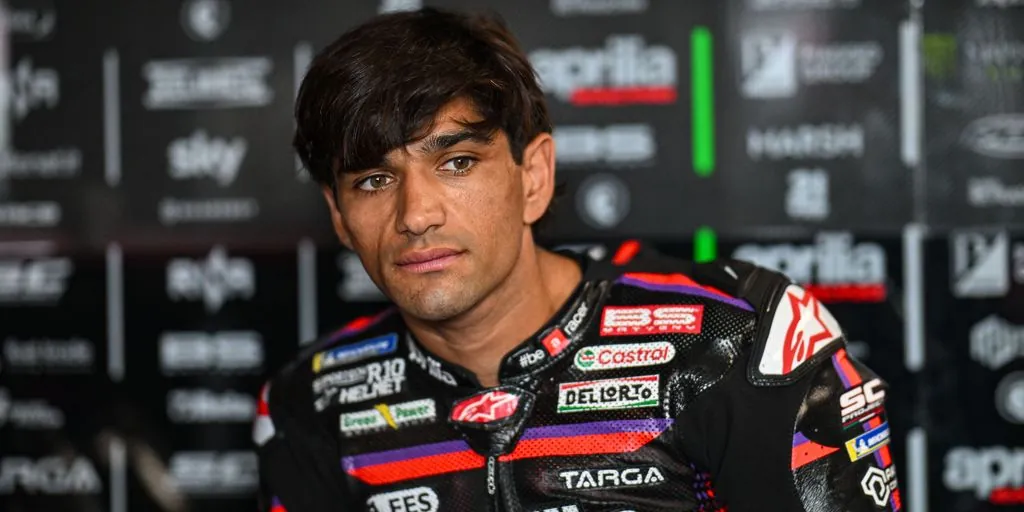
  • A motorcycle racer wearing racing leathers looks ahead inside a pit garage.

    The Strategic Risk of Sprint Duels

    Modern MotoGP sprint races compress intense point battles into short distances, tempting riders into aggressive overtakes before tyre degradation or fuel loads alter race dynamics. During the 2026 Australian Grand Prix weekend, Jorge Martin faced that tactical dilemma while defending a narrow championship advantage against Marc Marquez. Running aggressive lines through Phillip Island's fast, interconnected turns offers rapid track position gains, yet any mistake compounds when high-speed kerbs upset machine stability.

    How a Single Corner Altered the Championship Picture

    Martin's battle reached a turning point on lap eight when clipping the inside kerb at Turn 7 unsettled his machine, leading to a front-end slide entering Turn 8. Beyond the immediate loss of sprint points, medical checks confirmed a fractured radius and suspected ulna fracture in his forearm, ending his weekend entirely. The tactical reality that Jorge Martin Ruled Out of Australian GP After Phillip Island Sprint Crash demonstrates the asymmetric downside of sprint incidents, where pushing for a single race win can forfeit an entire weekend of championship scoring.

    Official reference: Jorge Martin ruled out of Australian GP after Sprint crash.

    How MotoGP Track Boundaries Shape Race Tactics and Penalties

    By: Pete Davidson On: 12:26
  • Share The Gag
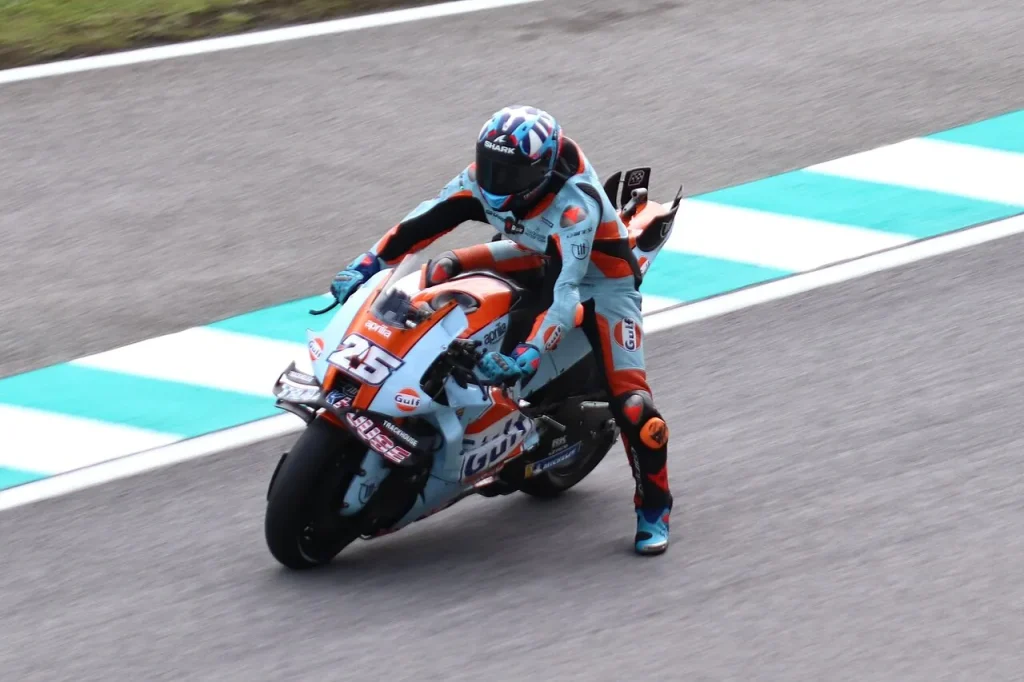
  • A motorcycle racer rides along a paved circuit next to the track kerbing.

    Track Boundaries and Immediate Penalties

    Under FIM Grand Prix World Championship regulations, MotoGP track limits rules require competitors to remain within designated asphalt boundaries and pit lane corridors throughout every official session. During practice and qualifying, pushing right up to the painted edges brings the clear strategic risk of lap deletion: touching beyond track boundaries invalidates the lap time, factoring in both machine and rider even if they become separated. In a race situation, exceeding boundaries or short-cutting to gain an advantage brings in-race disciplinary sanctions determined directly by the FIM MotoGP Stewards Panel.

    Rejoining Safely and Navigating In-Race Deadlines

    When an off-track run occurs, race tactics dictate how quickly and cleanly a rider rejoins. Regulations demand re-entering the circuit at an official designated point or without gaining an advantage, as skipping a major portion of the layout risks severe intervention from stewards. When an in-race penalty is handed down, the alert reaches the rider via on-bike dashboard signals while teams track it across pit monitors and boards. Strategic compliance begins immediately: the mandatory lap count to execute the sanction starts the very first time the bike crosses the finish line following the dashboard signal.

    Delaying compliance carries stiff escalation. Ignoring the window triggers compounding disciplinary measures from officials, which remain separate from standard statutory time substitutions that stewards can assign. Because track limit infractions are legally treated as statements of fact, these rulings cannot be protested or appealed to higher tribunals, making immediate, disciplined tactical execution the only viable option during a Grand Prix.

    Official reference: https://www.fim-moto.com/fileadmin/2026_GP_Sporting_Regulations_-_Updates_13_Sept__26.pdf?t=1792953378.

    Managing Physical Attrition Across Back-to-Back MotoGP Weekends

    By: Pete Davidson On: 09:25
  • Share The Gag
  • A close-up portrait of a motorcycle racer wearing racing leathers.

    The High Strategic Cost of Surrendering Track Position

    Grand Prix weekends demand calculated trade-offs between racing through persistent physical limitations and avoiding severe long-term complications. During the 2026 Australian Grand Prix, SuperFile Trackhouse MotoGP Team rider Raul Fernandez attempted to compete despite a stable right index finger fracture and soft-tissue inflammation sustained two weeks earlier at Mandalika. While he had secured a competitive second-row grid spot, acute pain during the short-distance contest cut the run short, and the development that Raul Fernandez Withdraws from Australian MotoGP After Sprint Retirement highlights how quickly physical strain can force a team to abandon a prime grid slot for Sunday's 27-lap race.

    Evaluating Long-Term Attrition Over Single-Event Gains

    Sprint races frequently act as an early indicator of whether a machine and rider can sustain race pace over a full Grand Prix distance without compromising safety. When managing an extremity injury responsible for throttle and front-brake control, persisting in high-speed competition risks compounding inflammation or triggering high-speed errors, as seen when Jorge Martin also crashed out of second place at Turn 8 on Lap 8 of the same Sprint. By stepping away from the Phillip Island feature race, Fernandez preserved what remained of his physical conditioning, though he was declared unfit ahead of the following round at Sepang pending further medical review in Malaysia.

    Official reference: Fernandez withdraws from Australian GP.

    How Jump Start Penalties Disrupt Modern MotoGP Race Strategy

    By: Pete Davidson On: 06:25
  • Share The Gag
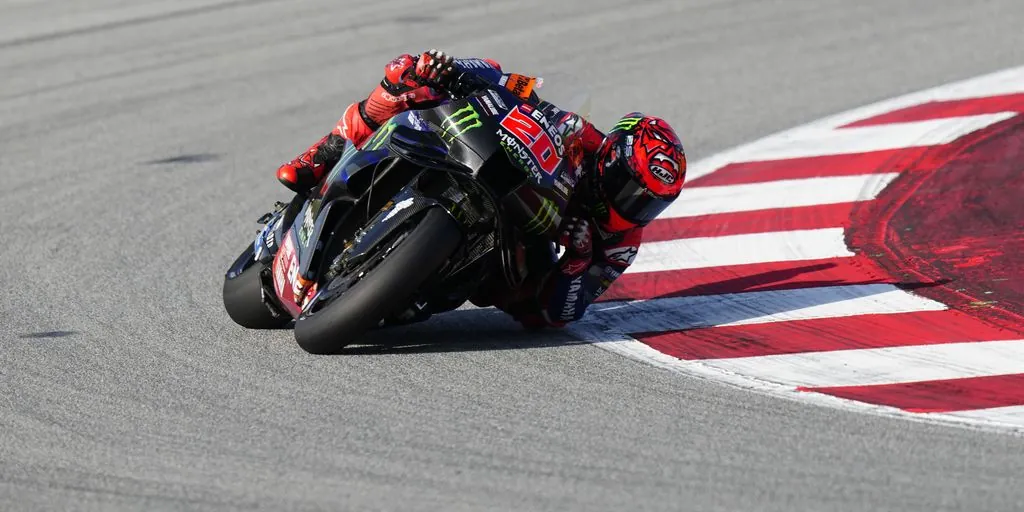
  • A MotoGP rider wearing race leathers and a helmet, riding a black and blue Yamaha motorcycle with number 20 and Monster Energy livery, leaning steeply into a corner on an asphalt track alongside red and white striped kerbing.

    The Cost of Anticipating the Start

    Launching off the line before the red lights extinguish immediately hands a rider a substantial competitive hurdle. Under the established MotoGP jump start penalty rules, stewards classify false starts as anticipating the start and assess a baseline sanction of two Long Lap Penalties during both full Grands Prix and Sprint events. This structure forces riders to adjust their race tactics on the fly rather than merely absorbing an end-of-race time calculation.

    Because running through a circuit's designated outer asphalt loop typically adds between two and four seconds to a lap time, having to complete the route twice routinely costs a competitor multiple track positions. Instead of defending an early advantage gained from a sudden jump, the penalized rider must strategically identify clean moments to execute both separate passes without getting boxed into heavy midfield traffic.

    Signaling and Enforcement Risks

    Stewards enforce the double penalty through multiple channels to ensure riders react promptly. The instruction appears directly on the bike's dashboard as a text alert reading L LAP X2 alongside yellow lights, while simultaneous notifications reach team pit wall monitors and trackside boards.

    Failing to serve the laps introduces severe tactical jeopardy. If a competitor repeatedly ignores the notification, stewards can escalate the sanction to a mandatory pit lane ride-through under the 60 km/h limit or impose a post-race time penalty of up to two minutes, transforming an early tactical setback into a total compromise of championship points.

    Official reference: Grand Prix racing explained: How the MotoGP™ championship works and key rules.

    How Drive-Time Audits Shape Sports Car Endurance Strategy

    By: Pete Davidson On: 03:24
  • Share The Gag
  • A front-three-quarter view of a white, red, and black #4 Audi 90 Quattro IMSA GTO race car driving on an asphalt course, with grass and straw bales visible in the background.

    Balancing Stint Quotas Across Driver Lineups

    In multi-driver sports car racing, building a winning strategy extends far beyond calculating fuel mileage and tire degradation. Sanctioning bodies enforce strict driving requirements that dictate how long competitors must remain behind the wheel. Under IMSA rules, entries face distinct tiers: silver- and bronze-rated competitors are held to specific minimum drive times, while all other co-drivers must complete supplemental base drive times. Strategists must carefully budget these stints over changing track conditions, knowing that unforeseen disruptions like red flags will proportionally scale back these required durations under sporting regulations.

    The Tactical Risk of Post-Race Class Demotions

    Managing these quotas involves delicate tactical compromises, especially when teams attempt to maximize the track time of their fastest professional drivers. Leaving required stints late into an endurance round creates enormous vulnerability. When teams miscalculate or run out of green-flag running to fulfill their obligations, the resulting IMSA minimum drive time penalties trigger an automatic demotion under Article 12.12. Rather than receiving an in-race time penalty, the offending car is dropped behind every compliant class finisher in post-race audits, turning what looked like a podium finish on track into a classification at the rear of the field.

    Official reference: IMSA Announces Drive-Time Penalties From Rolex 24 | IMSA.

    The High-Speed Risk Calculation When Rally Pacenotes Fail

    By: Pete Davidson On: 00:23
  • Share The Gag
  • A Toyota GR Yaris Rally1 World Rally Championship car navigates a sunlit gravel stage, kicking up a large plume of dust along a track bordered by trees and roadside fencing.

    The immediate strategic shift from attack to survival

    Rally crews operate on anticipation rather than reaction, relying on continuous descriptive calls to commit to blind crests and hidden apexes at maximum speed. When that stream of information is cut off, the crew faces an immediate strategic trade-off between protecting their overall rally position and risking catastrophic terminal damage. The driver must instantly back off, abandoning planned commitment speeds in favor of early braking and visual scanning of the road ahead.

    This high-risk scenario unfolded during the opening Cambyretá stage at Rally del Paraguay, when M-Sport Ford driver Josh McErlean and co-driver Eoin Treacy endured a violent jump landing that ripped the pacenote book directly from Treacy's grasp. Dealing with sudden WRC lost pace notes forced the crew into survival mode, where roughly 400 metres of road before an upcoming junction became a frantic window to regroup rather than push for stage time.

    Gaps in reconnaissance and managing incomplete data

    A crew does not need to drop physical paperwork to face the strategic dilemma of missing information. Gaps or inaccurate details jotted down during low-speed reconnaissance can leave drivers guessing at full competition speeds. At the 2022 Rally Japan, Thierry Neuville pointed out that strict reconnaissance limits of 60 km/h made judging high-speed lines and corner profiles difficult, leading to notes that did not always align with full-pace demands.

    When note details are absent or inaccurate, drivers cannot safely lean on predictive driving. At the 2026 Rally Japan, Takamoto Katsuta conceded 25.9 seconds on a single stage while battling missing information from his pacenotes alongside an earlier puncture. In these moments, giving up seconds over a sector is a deliberate strategic compromise, accepting a temporary loss on the timing sheets to ensure the car reaches the stop control intact.

    Official reference: FIA World Rally Championship regulations.

    Thursday, 29 October 2026

    Managing Risk and Spare Machinery in Changing Weather Qualifying

    By: Pete Davidson On: 21:22
  • Share The Gag
  • A motorcycle racer smiles while wearing racing leathers.

    The Strategic Trade-Off of Early Session Attacks

    In MotoGP qualifying sessions where rain threatens or returns, race strategists and riders face an immediate tactical dilemma: push on an imperfect surface to bank a lap before conditions worsen, or build rhythm cautiously. At the 2026 Australian Grand Prix qualifying at Phillip Island, returning rainfall over a damp track elevated the stakes. Committing early risks an immediate lowside, but hesitation risks being caught out if track grip deteriorates further across the short 15-minute window.

    When an incident does occur on an opening run, the operational readiness of the garage dictates whether a rider remains in contention. As demonstrated when Marc Marquez Recovers from Turn 4 Crash to Take Australian GP Pole, sprinting back to pit lane to switch to a prepared spare machine can salvage a session, provided the backup bike is dialed in for the evolving track state and the rider quickly resets their mental reference points.

    Timing Runs Against Worsening Track Grip

    Rejoining midway through a wet or mixed session requires precise timing. Johann Zarco demonstrated the advantage of continuous track exposure after progressing through Q1, using recent track references to temporarily hold provisional pole with a 1:35.706. However, leaving the decisive effort until the final minutes remains a high-variance gamble. While Marquez answered with an unrepeated 1:34.203 to head Alex Marquez by 1.494 seconds, title contender Jorge Martin spent most of the closing minutes down in tenth before finding enough margin on a final flyer to recover fourth on the grid.

    Official reference: Crash to pole: Marc Marquez delivers Q2 showstopper at Phillip Island.

    How MotoGP Teams Adapt Race Weekend Strategy When a Substitute Steps In

    By: Pete Davidson On: 18:21
  • Share The Gag
  • A motorcycle racer wearing racing leathers and a cap looks forward.

    Managing Rider Adjustments and Setup Goals

    Bringing a replacement rider into a Grand Prix fundamentally shifts a garage's technical roadmap for the weekend. When injury sidelines a regular competitor, the team cannot rely on pre-established baselines or fine-tune existing setups for marginal race-pace gains. Instead, initial practice sessions must be dedicated to basic ergonomic adaptations, baseline electronic calibrations, and finding a workable balance that suits a substitute's distinct riding style.

    That strategic pivot was highlighted when Fermin Aldeguer Ruled Out of Malaysian GP as Iker Lecuona Deputises at Sepang for Round 19 of the 2026 MotoGP season. Aldeguer remained unavailable while recovering from surgery on a fractured first metacarpal in his right hand suffered in a crash at Mandalika. For Lecuona, who also stepped in at the preceding Australian round, back-to-back appearances offered valuable continuity, yet the squad still faced the tactical task of recalibrating targets away from Aldeguer's podium-contending pace toward consistent data accumulation.

    Balancing Long-Run Pace and Sunday Risk

    From an operational standpoint, running a stand-in alters how a crew manages race distance and tyre choice. Rather than aggressively pushing edge-grip limits or experimenting with alternative compound options during qualifying simulations, crews often lean toward stable tyre selections that provide predictable feedback over a complete race run.

    The broader strategic objective for the team pivots from chasing championship points to mitigating damage, safeguarding hardware, and gathering reliable comparative telemetry until the regular rider can return to full fitness.

    Official reference: Aldeguer out of Malaysian GP.

    How Restart Lane Selection Works and Why NASCAR Penalizes Drivers for Indecision

    By: Pete Davidson On: 15:20
  • Share The Gag
  • Stock cars race through a turn on a banked oval track.

    Strategic Lane Selection and the Cost of Late Decisions

    NASCAR restart procedures allow drivers across all three national series to pick their preferred groove rather than being locked into strict inside-outside alternating positions. This mechanism lets crew chiefs and drivers weigh the trade-off between starting further back in the dominant lane or taking an advanced running spot on the weaker side of the track. However, committing to a lane comes with an immediate tactical risk. Drivers must declare their direction before reaching a designated track marker, because NASCAR choose cone penalties immediately demote any competitor who fails to commit in time or changes lanes after the commitment line to the tail end of the longest restart line.

    Unlike in-race penalties that are served under green-flag conditions or via timed stops, this tail-end sanction alters the restart grid before the green flag drops. Losing track position in this manner forces a team to spend multiple laps fighting through dirty air and heavy traffic to recover spots they willingly forfeited through procedural hesitation.

    Eliminating Pit Lane Gamesmanship

    Prior to this procedure, only the race leader enjoyed the privilege of selecting their restart lane, which created unintended incentives on pit road. Trailing drivers frequently slowed or braked while exiting their stalls to manipulate which lane they would occupy when blending into the double-file restart formation. NASCAR resolved this gamesmanship by moving lane selection onto the racing surface itself, testing an orange V commitment marker at the July 2020 All-Star Race at Bristol Motor Speedway before adopting the rule for points-paying races starting at Michigan International Speedway in August 2020.

    While the system governs oval restarts, NASCAR explicitly excludes superspeedways and road courses from the procedure. On tracks where the rule is active, race officials also coordinate subtle procedural steps to integrate wave-around cars and free-pass recipients into the running order while keeping lane choices orderly ahead of the green flag.

    Official reference: NASCAR official news and results.

    How Ride-Through Deadlines and Speed Limits Shape MotoGP Strategy

    By: Pete Davidson On: 08:09
  • Share The Gag
  • A motorcycle racer leans into a turn on a paved racing circuit beside a painted kerb.

    The Three-Lap Window and Tactical Timing

    Receiving an in-race sanction forces a rider and team into immediate tactical recalculation. Once stewards dispatch the sanction to the onboard dashboard, the lap count officially begins the first time the machine crosses the finish line. From that crossing, the rider has exactly three laps to peel off into pit lane. Ignoring or missing that window brings out the black flag, ending the rider's race on the spot.

    Understanding MotoGP ride-through penalty serving rules allows fans to see why riders rarely pit on the very first opportunity. Teams monitor gaps and track congestion to find clean air, aiming to rejoin behind or ahead of specific packs rather than dropping directly into heavy traffic or behind slower backmarkers. Taking full advantage of the allotted laps lets a crew pick the moment of least operational compromise.

    Speed Restrictions, Restarts, and Time Conversions

    Executing the penalty requires riding continuously through the pit lane without stopping. Speed management along the lane is critical: under Art. 1.21.14, exceeding the pit lane speed limit prompts swift escalation. The default penalty for speeding in pit lane is a Double Long Lap penalty, though stewards hold discretion to apply alternative sanctions, and repeated infractions invite even harsher penalties.

    Special provisions govern unusual race conditions. If a red flag halts the race before a rider serves an active sanction, the penalty carries over and must be served after the restart. Conversely, if Race Direction determines or delays a penalty late in the event such that it is not signalled before the chequered flag, the rider is not disqualified; instead, a predetermined post-race time penalty representing typical pit passage time is added to their final race duration.

    Official reference: https://www.fim-moto.com/fileadmin/2026_GP_Sporting_Regulations_-_Updates_13_Sept__26.pdf?t=1792878879.

    Why MotoGP Starting Positions Carry Twice the Strategic Impact

    By: Pete Davidson On: 05:08
  • Share The Gag
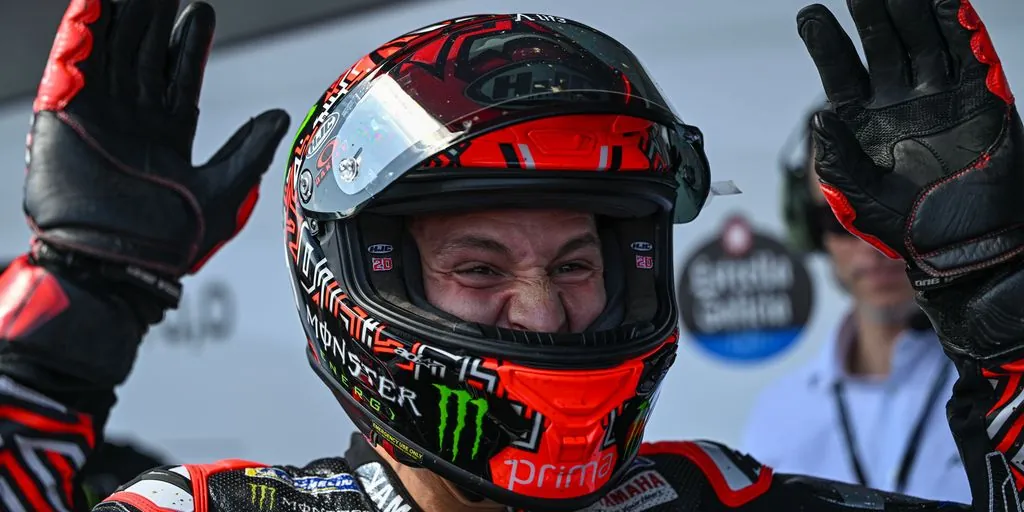
  • Close-up of MotoGP rider Fabio Quartararo wearing an HJC helmet with the visor raised and Monster Energy Yamaha racing gear, celebrating with both gloved hands raised in parc fermé or the pit lane.

    The Knockout Format and Early Cutoffs

    In modern Grand Prix motorcycle racing, race outcomes are closely tied to how MotoGP Q1 and Q2 qualifying work across the weekend schedule. The process begins on Friday afternoon during the sixty-minute Practice session, where the ten quickest riders earn direct entry into Saturday's final pole-position shootout. Everyone else is relegated to Qualifying 1, a frantic fifteen-minute scramble where only the fastest two advance to join the top ten in Qualifying 2.

    Riders relegated to Q1 face an uphill task. Third place in that initial session locks in thirteenth on the grid, with subsequent times filling fourteenth place downwards. While riders such as Marc Márquez and Jorge Martín have managed to progress through Q1 and still secure pole position, the extra running demands immediate peak pace and consumes valuable soft tyres before the decisive twelve-rider battle even begins.

    Strategic Trade-Offs for Saturday and Sunday

    Since 2023, the qualifying outcome dictates starting spots for both the Saturday half-distance Sprint and the main Sunday Grand Prix. Sprint finishing orders do not alter Sunday's grid, meaning any misstep in qualifying inflicts a double penalty on a rider's weekend points haul.

    Starting further back introduces significant racecraft compromises. Front-row starters avoid opening-corner congestion and can manage their tyres and fuel in clean air. In contrast, riders buried in the pack must navigate tight traffic, which frequently accelerates tyre wear and raises fuel usage during aggressive recovery efforts. Across the entire 2024 championship, every single Grand Prix was won from the front three rows, proving how severely a poor qualifying session limits realistic victory strategies.

    Official reference: How Does MotoGP™ Qualifying Work? – The Complete Guide.

    How Super GT Penalises Championship Leaders Without Overloading Race Cars

    By: Pete Davidson On: 02:07
  • Share The Gag
  • A pack of GT race cars speeds down the main straight during a race.

    Calculating Ballast and Onboard Limits

    In Super GT, championship success directly translates into competitive handicaps designed to keep the field balanced across the season. Under the baseline GT300 framework, cars accumulate a nominal penalty calculated at 2 kilograms per Drivers Championship point scored, up to a maximum cap of 100 kilograms. Although the series raised this calculation to 3 kilograms per point during the 2020 season to penalise early winners faster, officials later restored the 2-kilogram standard.

    Carrying massive physical weight creates structural and safety concerns for teams, particularly when combined with Special BoP Weight introduced to regulate GT300 speeds. Rather than loading the full calculated amount onto the chassis, the GT Association caps onboard physical ballast at 50 kilograms, matching the ceiling applied in the GT500 class.

    Strategic Pit Stop Impact and Late-Season Relief

    When points push a car beyond the 50-kilogram physical limit, the remaining handicap shifts from track handling to pit lane duration. Under Super GT success ballast rules, excess weight is converted into a Success refuelling restrictor fitted beneath the automatic shut-off valve on the fuel rig. Calibrated against each car's Balance of Performance fuel flow restrictor in pre-event technical bulletins, this smaller orifice slows fuel flow and artificially inflates pit stop stationary times.

    These strategic deficits do not persist at peak intensity all year. In the penultimate round of the championship, the handicap scale drops to 1.5 kilograms per point scored. For the season finale, ballast resets entirely to zero for every car that entered all eight championship rounds, ensuring title contenders fight the final race without handicap penalties.

    Official reference: SUPER GT official series information and results.

    Wednesday, 28 October 2026

    How In-Weekend Injury Logistics Shape MotoGP Championship Title Strategy

    By: Pete Davidson On: 23:07
  • Share The Gag
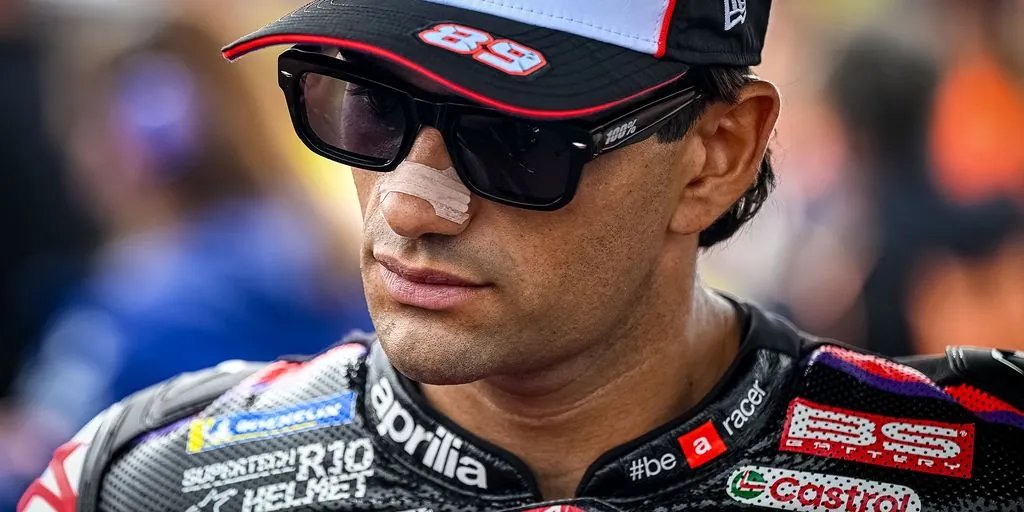
  • A close-up of a motorcycle racer wearing sunglasses, a cap, and racing leathers with a bandage across his nose.

    Balancing Long-Haul Travel Against Quick Physical Recovery

    When a rider suffers an injury during an overseas race weekend, the immediate plan often requires choosing between immediate transit to familiar medical specialists back home or remaining nearby to avoid the physical toll of long-haul travel. Such trade-offs become critical during the closing stages of a championship battle, where recovery time directly affects when a contender can realistically target a return to track action.

    That logistical calculation was on display when Aprilia decided Jorge Martin Will Not Return to Spain After Distal Radius Fracture treatment options were reviewed following his Australian Grand Prix weekend crash. Instead of subjecting his arm to extended international flights, the team opted for local care in the days following the incident to support recovery without the added strain of international transit.

    Championship Point Deficits and Late-Season Risk Management

    In terms of race strategy across a multi-round campaign, missing a Sunday Grand Prix alters a title contender's risk profile dramatically. After crashing out while disputing the lead during Saturday's Sprint at Turn 8 with Marc Marquez, Martin was declared unfit for the main race and surrendered the championship lead, falling ten points adrift.

    With 173 points still available between the Australian round and the season finale in Valencia, managing recovery rather than rushing logistics becomes the primary competitive objective. When facing a deficit late in the calendar, safeguarding physical capacity for the remaining rounds often outweighs the temptation to pursue hasty travel arrangements.

    Official reference: Martin update: 2024 Champion won’t return to Spain for treatment.

    How Qualifying Yellow Flags and Slipstreams Altered the Moto2 Grid at Phillip Island

    By: Pete Davidson On: 20:05
  • Share The Gag
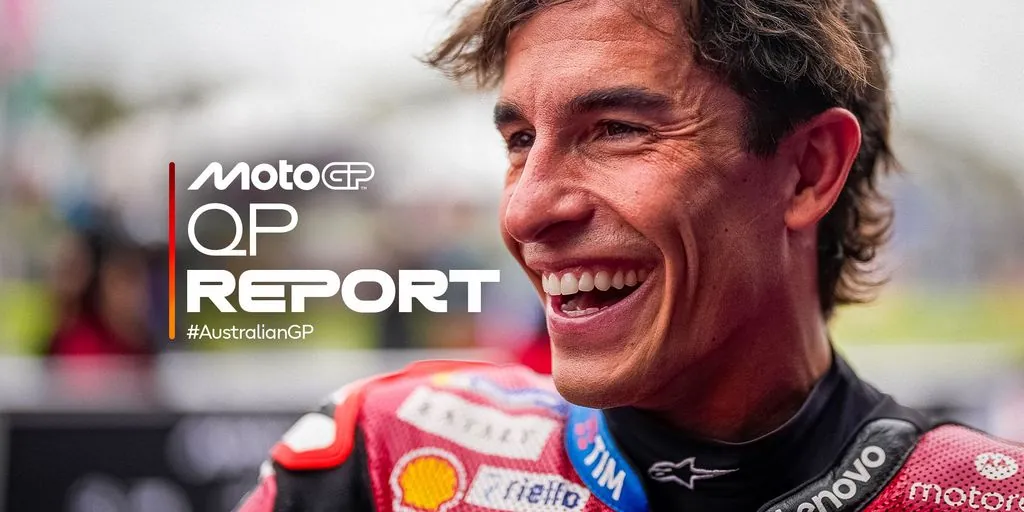
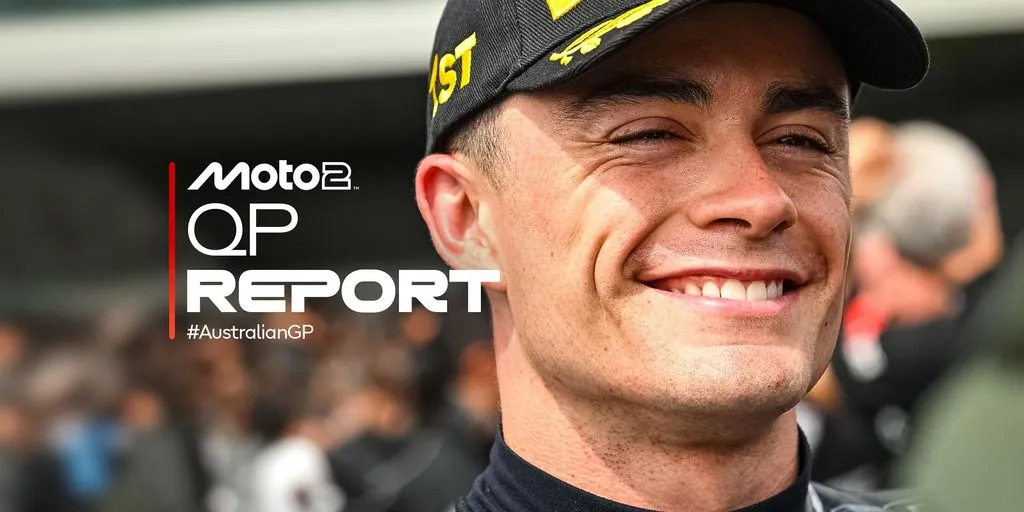
  • Close-up photograph of a smiling motorcycle racer wearing a black cap marked '1ST' on the side and a racing suit. On the left side of the frame is a graphic overlay reading 'Moto2 QP REPORT #AustralianGP'.

    Timing track position around incidents

    In fast-paced qualifying shootouts, track positioning dictates whether a rider encounters clear asphalt or yellow flags. At Phillip Island in October 2026, provisional pole-sitter Senna Agius suffered a crash at Turn 8 with just over four minutes left in Q2. Because yellow flags neutralize sector times to protect fallen riders, competitors caught immediately behind an incident often lose their best opportunity to set a flyer. Riders like David Alonso and Taiyo Furusato saw laps disrupted, whereas those running slightly ahead on the circuit were unimpeded.

    The strategic value of slipstreams in compressed margins

    Capitalizing on an uninterrupted circuit, Manuel Gonzalez Claims Australian GP Moto2 Pole for 100th Grand Prix by setting a 1:30.122 benchmark to head Barry Baltus by 0.106 seconds. Behind them, strategic positioning remained crucial: Filip Salac picked up an effective slipstream behind Izan Guevara on his final run, leaping to third place with a 1:30.237. Guevara recovered from earlier disruptions to place sixth, just 0.155 seconds off pole, leaving Gonzalez defending a 5.5-point championship lead into Sunday's race.

    Official reference: Gonzalez strikes pole as Championship battle heats up.

    Risk versus Reward in Short-Format Racing and Sprint Battles

    By: Pete Davidson On: 17:05
  • Share The Gag
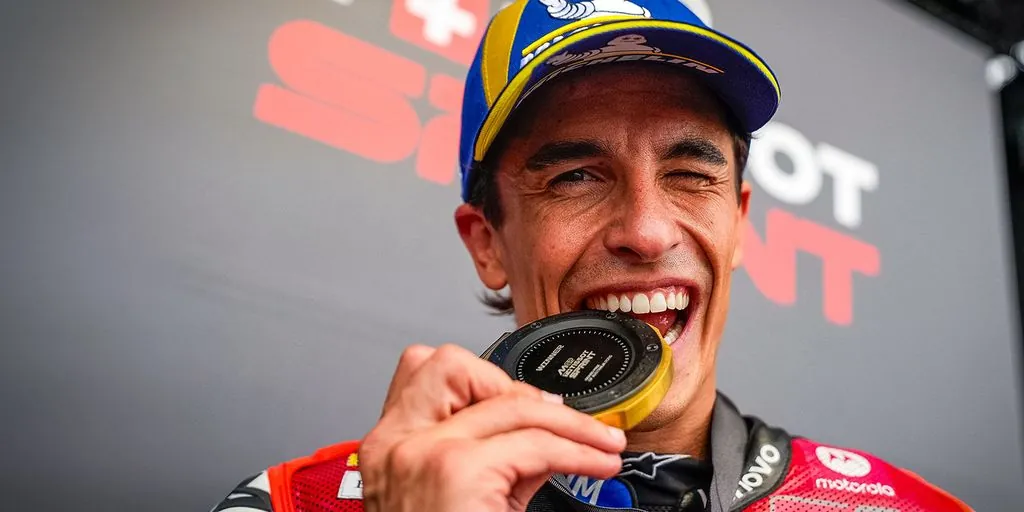
  • A motorcycle racer smiles and bites a sprint winner medal while celebrating.

    Balancing Sprint Aggression Against Weekend Risk

    Shorter sprint races offer quick championship points, but they compress decision-making into high-intensity combat where margins for error virtually disappear. During the 2026 Australian round at Phillip Island, an aggressive duel demonstrated the strategic calculation riders face between settling for solid points and risking everything for a sprint win. In that contest, Marc Marquez Takes Title Lead as Martin Crashes Out in Phillip Island Sprint after Jorge Martin crashed out from second place on lap eight while chasing down the lead.

    Martin had traded passes with Marquez across multiple laps, running wide at turn two and repeatedly attempting lunges into heavy braking zones. When pushing at the limit to regain track position, clipping an inside kerb at turn seven unsettled his machine, causing the front tyre to fold at turn eight. The resulting fall not only forfeited valuable sprint points but also caused a weekend-ending injury that ruled him out of Sunday's full-distance Grand Prix, showing how an aggressive gamble in a shorter race can severely compromise a wider championship campaign.

    Technical Margins and Post-Race Regulations

    Strategic calculations extend beyond on-track overtakes into baseline technical compliance, particularly around tyre management. Ai Ogura originally crossed the line in sixth place during the sprint, but stewards later imposed an eight-second post-race time penalty for a tyre pressure violation. Setting baseline pressures involves guessing how much heat and pressure will build up during combat in turbulent air; underestimating that buildup or running below mandatory limits drops a rider down the finishing order after the chequered flag, ultimately promoting competitors into scoring positions.

    Official reference: Marc Marquez takes title lead with Sprint win, Martin crashes out of epic battle.

    How Practice Red Flags and Late Time Attacks Shape Weekend Qualifying Strategy

    By: Pete Davidson On: 13:54
  • Share The Gag
  • A motorcycle racer leans into a turn on an asphalt circuit.

    Managing Disrupted Sessions and Session Run Plans

    Friday practice sessions in MotoGP determine direct entry into Qualifying 2, making track time management critical when interruptions shrink the usable window. When multiple stoppages occur early in running, crew chiefs must balance bike setup verification against the immediate necessity of soft-tyre time attacks. A compressed schedule leaves minimal margin for mechanical issues or falls, as riders have fewer clean laps to evaluate baseline pace before committing to maximum-risk single-lap attempts.

    Timing the Decisive Push and Avoiding Yellow Flags

    The strategic stakes became clear during the Australian Grand Prix weekend, where Marco Bezzecchi Tops Friday MotoGP Practice at Phillip Island as Aprilias Surge into automatic qualifying berths. Teams targeting a final push run the risk of meeting late track incidents; when a fall brings out local yellow flags in the closing minutes, any trailing competitor on a personal best must forfeit their lap. Missing the top ten by hundredths of a second forces contenders into Qualifying 1, where they consume extra tyre allocations simply trying to reach the front four rows of the grid.

    Official reference: Bezzecchi fastest on Friday at Phillip Island, Aprilias gang-up on Marc Marquez.

    The Strategic Clock Behind MotoGP Double Long Lap Penalties

    By: Pete Davidson On: 10:53
  • Share The Gag
  • A Grand Prix motorcycle rider leans through a turn on a racetrack.

    The Window to Execute and Traffic Management

    When race stewards hand down a sanction requiring two trips through the penalty loop, the timing of each pass introduces immediate strategic decisions for both rider and pit wall. Official rules dictate that the countdown does not start when an incident occurs, but on the first crossing of the finish line after the instruction appears on the dashboard display. From that point, the rider has a strict five-lap window to complete both loops on separate laps. Choosing when to peel off requires balancing the risk of rejoining into heavy pack traffic against running out of allotted laps.

    Navigating the Corridor and Handling Track Flags

    Understanding how MotoGP double long lap penalties are served highlights the procedural discipline demanded while running at racing speed. The marked corridor sits on the asphalt runoff outside a designated turn, outlined by painted white boundaries that riders must stay strictly within to avoid having to repeat the sanction or facing harsher penalties. In addition, overtaking within the lane is barred, and entering the track afterwards must be done without endangering competitors. If yellow flags cover the penalty corner, entering the lane is forbidden, though stewards add compensatory laps to the five-lap compliance limit for each unusable tour.

    Risks of Noncompliance Versus Post-Race Conversions

    Failing to clear both required passes before the five-lap allowance expires immediately escalates the penalty rather than simply adding seconds at the checkered flag. Incomplete compliance triggers a pit lane ride-through penalty, which carries its own three-lap window before drawing a black flag. By contrast, predetermined equivalent time penalties are reserved for scenarios where infractions occur too late in a grand prix for the signal to be displayed and served naturally, or if an interrupted race cannot resume.

    Official reference: https://www.fim-moto.com/fileadmin/2026_GP_Sporting_Regulations_-_Updates_13_Sept__26.pdf?t=1792877218.

    How IMSA Driver Changes Impact Pit Stop Strategy

    By: Pete Davidson On: 07:52
  • Share The Gag
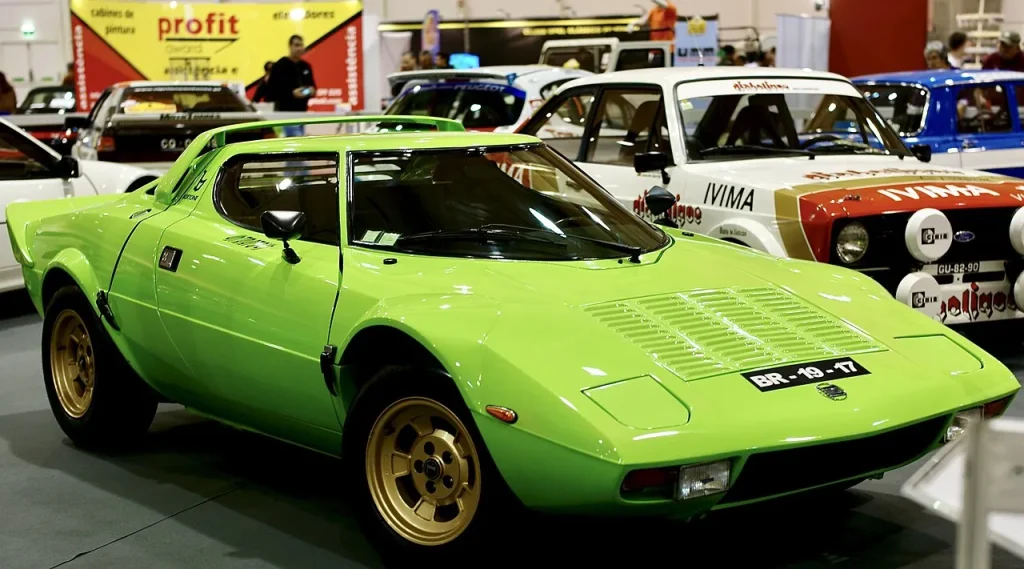
  • A Lancia Stratos HF sports car.

    The Servicing Window vs Cockpit Choreography

    During an IMSA endurance race, standard pit stops involving four fresh tires and a full fuel load typically take under 25 seconds. When a team opts to swap drivers, that cockpit exchange must happen simultaneously with fueling to avoid extending stationary pit time. Under series regulations, crew members cannot cross the wall until the car comes to a complete halt, and only four designated crewmen handle mechanical servicing and tires, while a single assistant is allowed over the wall specifically to manage the driver switch.

    Because of this operational boundary, understanding endurance racing driver change rules helps explain why teams obsess over cockpit choreography. The lone driver assistant must aid the exiting driver, position any tailored seat inserts required for teammates of differing sizes, secure the replacement driver's multi-point safety harness, and connect radio lines, cooling air hoses, and hydration tubes. If this delicate physical sequence takes longer than 25 to 30 seconds, the car sits idle waiting on belts rather than fuel, surrendering track position.

    Unlocking Tactical Flexibility on Tires

    When a team reliably executes a seamless swap within 25 to 30 seconds, race strategists gain valuable tactical freedom. For instance, teams can elect to take only two fresh tires during a pit visit to cut transit time and jump rivals. If the cockpit change were sluggish, taking fewer tires would offer zero strategic benefit because the car would remain trapped on its jacks waiting for the incoming driver to be secured.

    These strict pit constraints also operate under an unforgiving safety environment. Cars must observe a 60 km/h pit-lane speed limit, where any breach results in a drive-through penalty or black flag. Meanwhile, co-drivers navigate intense spikes in physical stress the moment they enter pit lane, transitioning abruptly from hours behind the wheel to leaping past active machinery on a crowded pit road.

    Official reference: Art of the Driver Change: Poetry (or Comedy) in Motion | IMSA.

    How WRC Tyre Quotas Shape Rally Strategy and Route Choices

    By: Pete Davidson On: 04:51
  • Share The Gag
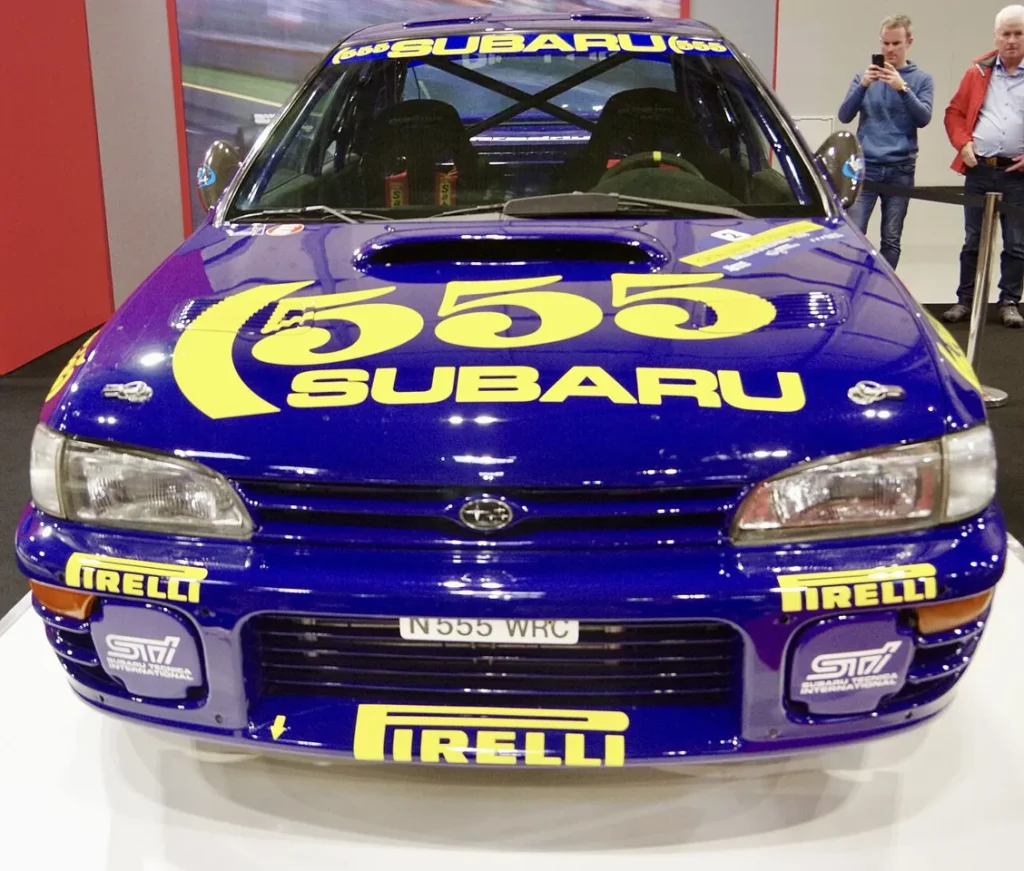
  • A rally car is on display indoors.

    Strict Allocations Limit On-Stage Flexibility

    In modern World Rally Championship competition, tire selection is not an open buffet of compounds, but an exercise in managing a strictly limited quota across an entire weekend. Before cars tackle competitive stages, every four-wheel-drive entry must draw from a fixed set of rubber supplied by the championship partner, Hankook for 2026. Teams cannot simply swap tires freely whenever conditions shift or a compound wears prematurely, making each service departure a high-stakes calculation about road degradation and weather risk.

    Scrutineers monitor these limits at designated check stations positioned at the exits of service parks, Remote Service Zones, and Tyre Fitting Zones. Having the technical framework of WRC tyre marking explained reveals why teams deliberate so intensely over their spare packages: handheld scanners log embedded RFID tags and unique barcodes to guarantee that only the specific rubber registered to that entry leaves the service area.

    Managing Spares and Loop Trade-Offs

    Strategic discipline extends onto the road sections between competitive tests. Regulations mandate that complete wheels may only be mounted or dismounted within official service parks or authorized tire fitting zones. Any spare wheels loaded onto the car at service must remain onboard until the next permitted work zone, directly forcing crews to balance the safety net of carrying extra spares against the unwanted vehicle weight across consecutive stages.

    Officials enforce these rules through random conformity checks throughout the route, alongside tire manufacturer technicians who monitor compound condition at stage stop controls. While teams are permitted to use non-registered tread patterns from the supplier on transit road liaisons, any unauthorized compound fitted during a special stage leads to immediate steward reports and sporting penalties, ensuring that pace on the road reflects tactical allocation management over the entire rally distance.

    Official reference: https://www.fia.com/system/files/documents/wrc_2026_sr_version_13_january_2026.pdf.

    How MotoGP Flag-to-Flag Rules Permit Multiple Bike Swaps and Why They Carry Huge Strategic Risks

    By: Pete Davidson On: 01:50
  • Share The Gag
  • Marc Márquez riding the #93 Repsol Honda MotoGP motorcycle, leaning into a corner on an asphalt circuit alongside red-and-white striped kerbing. The rider is wearing branded Repsol Honda leathers and a helmet, with visible Honda, Repsol, and Red Bull liveries.

    The Rules Behind Premier-Class Bike Swaps

    Premier-class Grand Prix regulations permit riders to switch between their two allocated motorcycles without any numerical limit once an event is declared flag-to-flag. Because MotoGP teams prepare two functional machines per rider, competitors can pit as often as track conditions dictate, unlike Moto2 and Moto3 where budget rules restrict entrants to a single motorcycle. Officials open pit lane for swaps by waving white flags during rainfall or by declaring a wet race prior to the start. The regulatory framework places no restrictions on tyre selections, allowing teams to fit wets, slicks, or even identical compound setups across both machines.

    The Tactical Cost of Multiple Pit Visits

    While the rulebook places no ceiling on swaps, visiting pit lane imposes a massive time deficit that heavily penalises miscalculations. Riders must strictly respect the 60 km/h pit-lane speed limit between the entrance and exit timing lines, risking a standard double Long Lap penalty for speeding violations. In unpredictable weather, MotoGP multiple bike changes can quickly derail a race if track conditions do not evolve as anticipated. At Misano in 2024, Jorge Martin pitted from dry slicks to rain tyres during light showers, but the rainfall ceased almost immediately, forcing a second pit stop to switch back to slicks and dropping him to 15th while Marc Marquez stayed out on slicks to take the win.

    Exceptional Safety Mandates Versus Rider Discretion

    Under normal circumstances, entering pit lane remains entirely at the rider's discretion, guided by pit boards and dashboard messaging. However, race officials can enforce the bike-swap procedure for safety considerations rather than weather. During the 2013 Australian Grand Prix at Phillip Island, resurfaced asphalt raised concerns that tyres would not survive full distance without prior testing. Race direction mandated that every rider swap to their second motorcycle on lap 9 or 10, a strict requirement that resulted in Marc Marquez being disqualified for stopping outside the designated window while Jorge Lorenzo went on to win. Outside such rare safety directives, executing multiple bike swaps remains a calculated gamble against pit-lane transit times and rapidly shifting track conditions.

    Official reference: How Do MotoGP™ Riders Switch Bikes During a Race?.

    Tuesday, 27 October 2026

    Why Grounded Medical Helicopters Halt Track Action and Disrupt Race Day Schedules

    By: Pete Davidson On: 22:48
  • Share The Gag
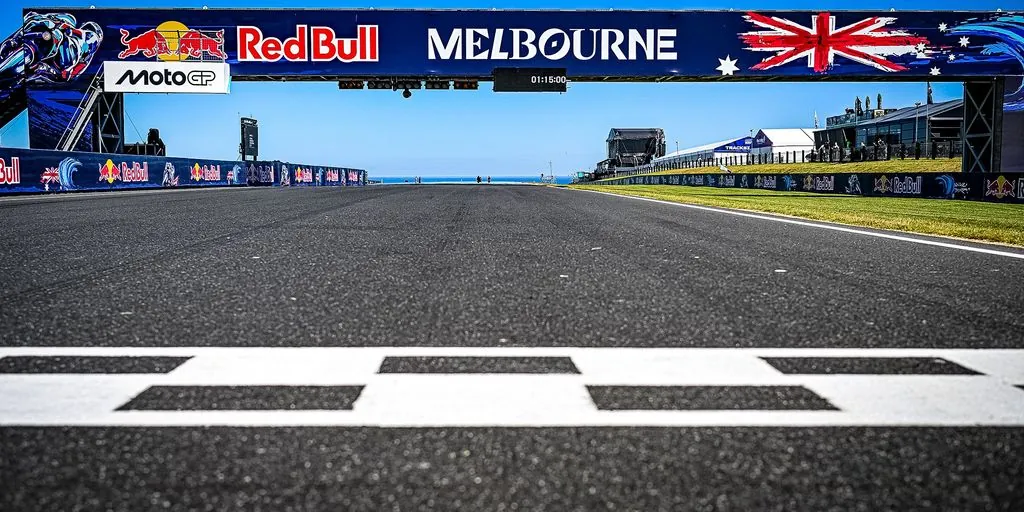
  • An empty race track straight extends from the start-finish line beneath an overhead gantry.

    Safety Protocols Dictating Event Delays

    When adverse weather restricts flight operations at a circuit, track activity comes to a sudden halt regardless of whether the asphalt itself appears rideable. During the 2026 Australian Grand Prix at Phillip Island, track action was halted when low visibility prevented medical aircraft from operating safely. Race directors and sporting organizers cannot clear motorcycles or cars onto the circuit unless a compliant emergency evacuation protocol is active, which was illustrated when the MotoGP Australian GP Delayed as Reduced Visibility Grounds Medical Helicopter incident forced officials to postpone morning track running while awaiting clearer skies.

    Under FIM Grand Prix World Championship Regulations, specifically Article 5.3.12, having a fully equipped and staffed medical evacuation helicopter positioned near the circuit medical centre is the baseline requirement. Guidance stipulates that the designated receiving hospital should normally be reachable within 20 minutes by air. If low cloud cover or poor visibility grounds the aircraft, the primary emergency evacuation route is severed, leaving officials with strict procedural choices before any session can take place.

    Road Transport Alternatives and Operational Impact

    Regulations do allow for road ambulance transfers as an alternative under Article 5.3.12(c), but only following consultation among the Chief Medical Officer, the Medical Director, and the FIM Medical Officer. This exception depends strictly on whether the receiving trauma facility is within a reasonable distance, typically recommended as under 45 minutes by road. If surrounding infrastructure or geographical isolation exceeds that limit and no helicopter can take off, the rulebook advises that consideration must be given to stopping the event entirely.

    For teams and race directors, these safety stoppages compress the timetable and alter track preparation. At Phillip Island, officials initially looked toward an estimated window around 11:00 local time to resume running, designating the 10-minute Warm Up as the immediate priority once cleared. Delays of this nature leave teams managing tire warming cycles, race fuel preparation, and setup plans on short notice, as the timing of any restart hinges entirely on local weather clearing or formal approval of road transit.

    Official reference: LATEST: MotoGP Phillip Island track activity delayed.

    How Pit Lane Speed Restrictions Shape Strategic Risk in IMSA

    By: Pete Davidson On: 19:48
  • Share The Gag
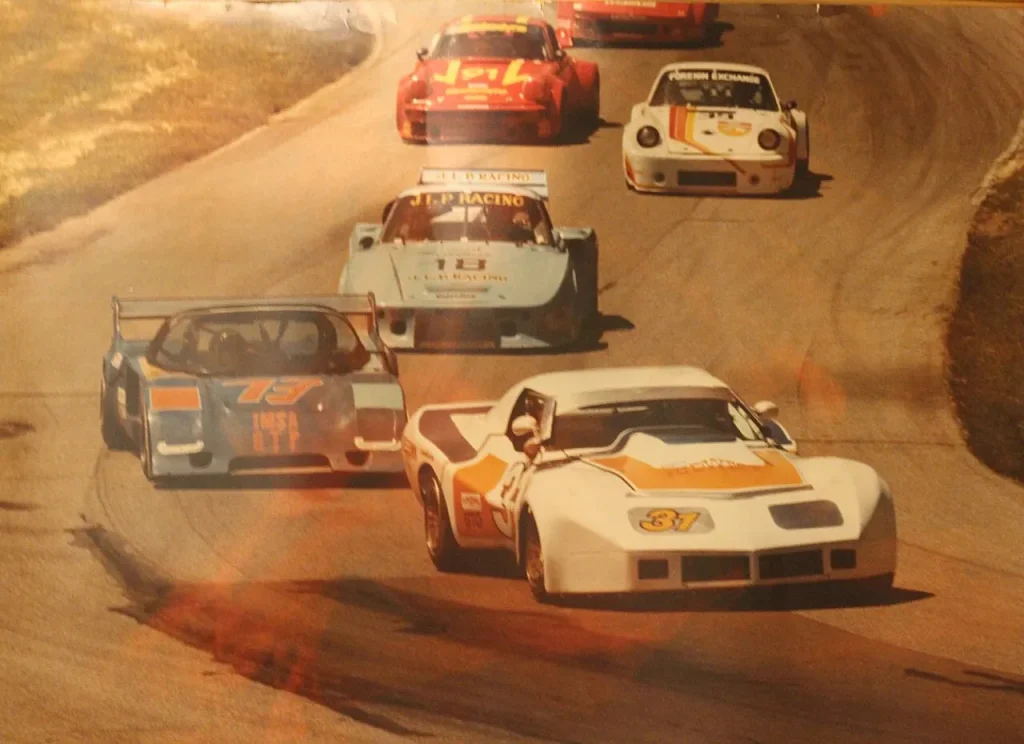
  • A group of IMSA sports cars navigating a turn on an asphalt circuit, prominently featuring a white and orange Chevrolet Corvette (No. 31) with GTO markings alongside a light blue GTP prototype (No. 73) displaying 'IMSA GTP' lettering on the nose, trailed by a light blue J.L.P. Racing.

    The Fixed Time Cost of Pit Lane Transit

    In sports car endurance racing, pit lane time is among the most heavily managed variables on a timing stand. Under official IMSA pit lane speed limit rules, every competing car across all classes must observe a strict 60 km/h ceiling when navigating the lane. Because speeds are electronically restricted to this uniform pace, the baseline elapsed time spent entering, rolling through, and exiting pit lane remains largely fixed regardless of vehicle performance.

    This static transit duration sets the foundation for every strategic calculation during green-flag and caution-period stops. Any service time for fuel, tyres, or driver swaps is added directly to that transit floor, limiting how much total track position can ever be clawed back on pit lane entry or exit alone.

    The Strategic Impact of Speeding Penalties

    Because drivers attempt to hit the 60 km/h threshold at the exact entry line to minimise lost tenths, the operational margin for error is razor-thin. Violating the limit triggers a mandatory drive-through penalty, forcing the car to complete another full trip through pit lane at 60 km/h without taking fuel, tyres, or repairs.

    From a tactical standpoint, a drive-through is one of the most punishing setbacks in multi-class racing. It forces an unscheduled transit that costs crucial track position and disconnects a car from its competitive pack, with repeated noncompliance risking an immediate black flag from race control. Teams must balance the minute gains of aggressive pit entry braking against the catastrophic strategic downside of an enforced drive-through.

    Official reference: WeatherTech: Understanding The Sport | IMSA.

    Monday, 26 October 2026

    How Venue Concentration Shapes NASCAR Road Course Success

    By: Pete Davidson On: 05:31
  • Share The Gag
  • Driver wearing sunglasses, a green cap and a green-and-white AMP racing suit waves beside stock cars, with a crowd behind him.

    Specialization Versus Circuit Variety

    When evaluating road racing records in stock car competition, race strategists and fans often look at how a driver's success is distributed across different layouts. Some drivers built dominant records by mastering a single venue. In a ranking based on an Oval Insider June 30, 2026 snapshot, Darrell Waltrip earned all five of his qualifying wins at Riverside, while Bobby Allison secured all six of his listed victories at the same circuit. For crew chiefs planning race setups and pit strategy, that concentration reflected an era where mastering one specific layout defined a team's road-racing program.

    The Evolution of Layout Diversity

    Modern schedules require teams to adapt across a wider range of technical challenges, from street circuits to traditional natural-terrain road courses. Shane van Gisbergen accumulated eight victories across five different venues, including street courses such as Chicago, traditional tracks like Sonoma and Watkins Glen, and international stops like Autodromo Hermanos Rodriguez. Similarly, Chase Elliott collected his seven listed wins across five circuits, including the Charlotte Motor Speedway Roval, Road America, and Daytona's road course, without any coming from Sonoma.

    All-Time Totals and Strategic Adaptability

    The all-time ranking highlights a direct tension between mastering two legacy venues and adapting to modern scheduling variety. Jeff Gordon tops the list with nine wins split entirely between Sonoma and Watkins Glen, closely followed by Tony Stewart on eight wins across the same two circuits. Looking across the top 10 NASCAR Cup Series drivers with the most road course wins, which expands to eleven drivers when accounting for ties at five victories, team success historically swung between intense specialization at Riverside, Sonoma, or Watkins Glen and multi-venue versatility across varied circuit layouts.

    Official reference: NASCAR official road-course winners list.

    Leading Versus Chasing: The Strategic Risk of the Final Lap at Indianapolis

    By: Pete Davidson On: 02:30
  • Share The Gag
  • Open-wheel racing cars spread across the Indianapolis main straight beside crowded grandstands and a flag stand.

    The vulnerable leader on a late restart

    When late-race cautions compress the field at the Indianapolis 500, holding the lead for a short dash to the checkered flag creates an acute tactical dilemma. The lead driver must cut the air alone, punching a hole in the aerodynamic wake that offers trailing cars an enormous tow. In short sprint scenarios, such as the single-lap restarts seen in 2023 and 2026, leading into Turn 1 can leave a driver exposed along the backstretch or front straight to a trailing car timing its slipstream pass.

    A look at the top 10 closest finishes in Indianapolis 500 history illustrates how frequently these narrow margins arise from contrasting last-lap positions. In 2026, Felix Rosenqvist utilized a late restart sprint to execute a final-lap pass on David Malukas, winning by 0.0233 seconds. Similarly, in 2023, Josef Newgarden overtook Marcus Ericsson on the backstretch on the final lap following a late red flag to claim victory by 0.097 seconds. In both cases, the chaser capitalized on the aerodynamic draft to displace the driver who had led into the restart.

    Timing the draft to avoid getting countered

    Trailing drivers face their own tactical calculation: passing too early can hand the draft advantage back to the rival before reaching the yard of bricks. In 2014, Ryan Hunter-Reay made his winning move at the start of the final lap and had to defend against Helio Castroneves across the entire 2.5-mile circuit to preserve a 0.060-second win. Conversely, Sam Hornish Jr. delayed his move in 2006, sweeping past Marco Andretti only in the final yards to seal victory by 0.063 seconds without giving Andretti an opportunity to draft back past.

    Not every pursuit succeeds, however. Scott Goodyear drafted right up alongside Al Unser Jr. in 1992 but ran out of track distance by 0.043 seconds, while Alexander Rossi closed within 0.208 seconds of Simon Pagenaud in 2019 after trading the lead back and forth over the final laps. Whether a driver chooses to defend early track position or surrender the point to time a slingshot out of Turn 4, the margin for error remains measured in hundredths of a second.

    Official reference: INDYCAR official 2026 Indianapolis 500 event and results.

    Sunday, 25 October 2026

    Why Pit Road Speeding Penalties Depend on Timing Segments Rather Than Radar

    By: Pete Davidson On: 23:29
  • Share The Gag
  • Red No. 57 Chevrolet racing truck on pit road, with crews and pit equipment behind it.

    Calculating Average Pace Across Individual Zones

    When race control issues a pit road penalty, broadcast viewers often assume an official pointed a radar gun or clocked the car at a single peak moment. In reality, understanding how NASCAR measures pit road speeding between timing lines reveals why enforcement functions as an ongoing calculation rather than a snapshot. Pavement-embedded scoring loops register a car transponder at fixed intervals, dividing the pit lane into several sequential zones. Officials determine the elapsed travel time across each known distance to calculate an average pace, checking each zone as an independent measurement.

    Strategic Pit Stop Positioning and Throttle Margin

    Because each interval is treated separately, a driver cannot offset a violation in one zone by cruising slowly through another. However, that segment-based math introduces significant tactical nuances around the pit stall itself. Time spent stationary during tire changes and fueling counts toward the elapsed duration of whichever timing segment contains the stop. That accumulated standstill pulls down the segment average, granting the driver a brief margin to accelerate aggressively away from the box without exceeding the calculated limit for that specific zone.

    That cushion vanishes the moment the nose crosses the next timing loop into a clean segment. Pit crews therefore study loop locations carefully to map where stops occur relative to zone boundaries. In shorter segments, small bursts of excess throttle account for a larger share of overall transit time, reducing the margin for error. While tachometer lights give drivers an instantaneous reference against the posted limit and its enforcement tolerance, executing a fast stop without drawing a penalty requires managing calculated averages across every distinct line on the lane.

    Official reference: NASCAR explanation of pit-road timing lines and speed enforcement.

    Reading Practice Times Through Tyre Run Plans and Track Limits

    By: Pete Davidson On: 20:28
  • Share The Gag
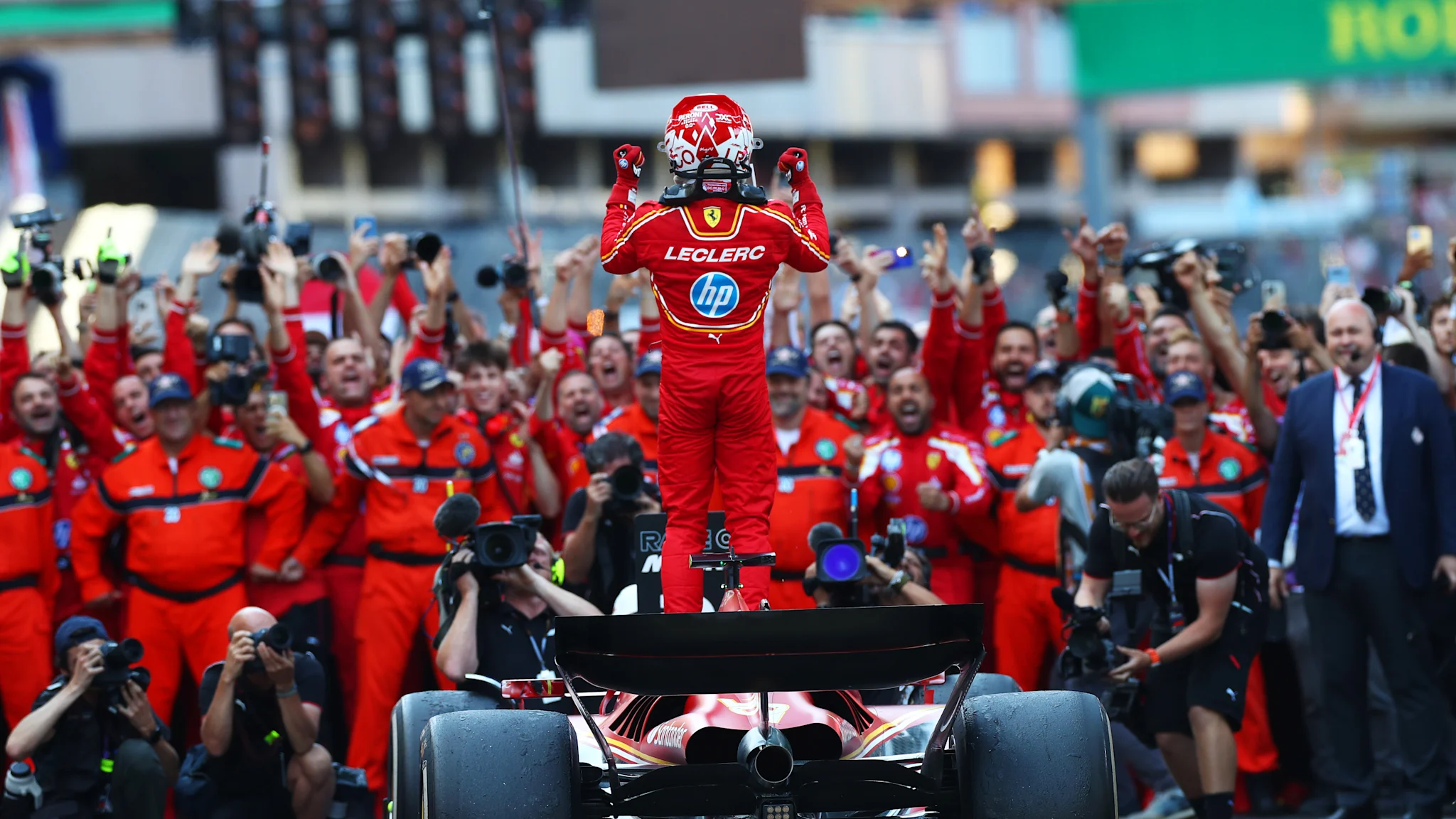
  • Charles Leclerc stands on a Ferrari with both arms raised while team personnel celebrate and photographers surround the car.

    Tyre Run Plans Distort Early Comparisons

    Headline practice times can be misleading for fans evaluating outright competitive order because teams run staggered tyre strategies. During opening practice for the 2026 United States GP: Leclerc and Ferrari started their program on medium tyres alongside McLaren, whereas Red Bull and Mercedes carried out initial runs on hard compounds. This initial tyre offset distorted early timesheets before frontline contenders shifted to soft rubber in the second half of the hour.

    Evaluating single-lap pace on identical tyre compounds is only part of the preparation. Ferrari evaluated aerodynamic changes to its floor, sidepods, and diffuser during the session, and late running saw teams switch from low-fuel qualifying preparations to heavier-fuel race simulations, which naturally dropped lap times.

    The Impact of Boundary Violations and Handling Compromises

    Deleted lap times introduce another variable that clouds direct lap-time comparisons. Leclerc retained the fastest time at 1:36.052, beating Max Verstappen by 0.084 seconds, but Verstappen actually produced a quicker lap that was deleted due to exceeding track limits at Turn 19. That removal determined the official session order rather than proving Ferrari held outright pace across every run.

    Mechanical balance quirks further complicated the run plans. Verstappen noted steering friction when turning left early in the running, while George Russell encountered sudden understeer, though neither issue was confirmed as an outright component failure. For fans tracking race weekend progression, practice times reflect an evolving mix of tyre allocations, experimental run plans, and boundary margins rather than definitive race pace.

    Official reference: Formula1.com’s account.

    Saturday, 24 October 2026

    How Circuit Elevation Profiles Influence Race Strategy and Overtaking

    By: Pete Davidson On: 03:31
  • Share The Gag
  • A red Ferrari leads a dark Red Bull through a circuit corner beside red-and-white kerbing and grass.

    Measuring Vertical Change Across a Grand Prix Lap

    Grand prix circuits are rarely flat ribbons of asphalt, but assessing their terrain requires understanding how numbers are calculated. In comparisons published by Formula1.com in September 2024, published figures measure the absolute vertical span between a track's highest and lowest points rather than the cumulative sum of every uphill slope. On this list of the top 10 F1 circuits with the biggest elevation changes, Spa-Francorchamps leads with a 102.2-metre gap between its extremes, followed by the Red Bull Ring at 63.5 metres, while tracks like Sepang sit at 22 metres.

    Because these statistics capture only peak-to-trough range, a large figure does not automatically mean a single steep climb. For instance, while Circuit of the Americas features a 30.9-metre difference measured between the Turn 19-20 area and the Turn 1 crest, venues like Sepang distribute their 22-metre variance across multiple rises and falls between Turns 3 and 11.

    Gradients, Braking Zones, and Track Position Dynamics

    For strategists planning race execution and drivers sizing up passing attempts, where these elevation changes occur on the lap matters more than the overall venue height. At Circuit of the Americas, the steep uphill approach into Turn 1 provides natural resistance that assists deceleration, allowing trailing cars to brake exceptionally late when contesting position on track. Conversely, approaching heavy braking zones on a downhill slope, such as the entry toward Suzuka's Turn 1 sequence following the descent from the final corners, complicates braking stability and increases the risk of lockups.

    These physical profile variations alter overtaking feasibility and tyre degradation across different sectors. Circuits featuring compact vertical changes, like Monaco's 42-metre drop between Casino Square and the run before La Rascasse or Baku's narrow 26.8-metre rise through the old town toward Turn 13, heavily constrain passing opportunities. When overtaking becomes mathematically difficult due to tight topography, pit-stop timing and track position take precedence over outright raw pace.

    Official reference: Formula1.com’s circuit comparison.

    How Final-Lap Penalties Alter Race Strategy and Finishing Times

    By: Pete Davidson On: 00:40
  • Share The Gag
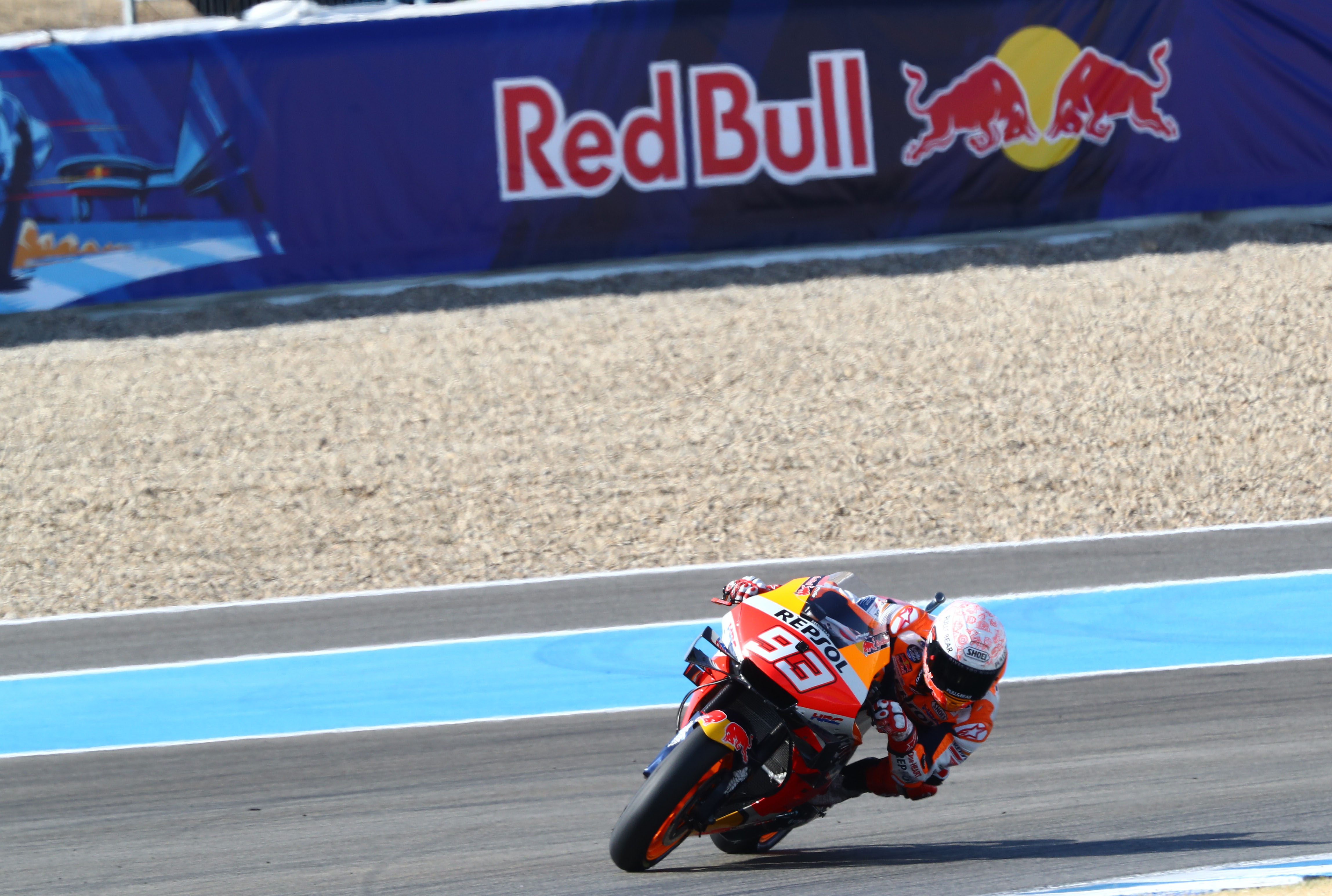
  • Rider leaning a Repsol Honda motorcycle numbered 93 through a corner, with blue runoff and gravel behind.

    Running Out of Laps to Serve on Track

    During a Grand Prix, receiving a penalty usually triggers a strategic calculation over when to take the detour within a multi-lap window. However, tactical planning shifts entirely when considering what happens if a MotoGP rider gets a long lap penalty on the last lap of the race. Because the chequered flag arrives before an athlete can complete the designated loop, the sanction does not disappear; it is instead converted into an added time penalty applied to their finishing result.

    Circuit-Specific Conversions and Stewards Discretion

    Rather than relying on an arbitrary universal penalty duration, the time added to a rider's final clock is determined beforehand. Teams are notified of the specific penalty route and its official equivalent time value prior to the weekend's opening practice session. Stewards also retain the authority to impose this equivalent time adjustment or assess alternative sanctions if an infraction could not be signalled before the race concluded.

    Crucially, running out of track time is handled differently from refusing to serve an active penalty. While ignoring a penalty during live running triggers severe escalations such as a double loop or a pit-lane ride-through, late-race timing limits simply shift the verdict to post-race adjustments. Furthermore, where an infringement involves last-lap track limits in close battles, stewards can mandate a direct loss of position instead of an added-time calculation if an unfair advantage altered the contest.

    Official reference: MotoGP's official track-limits guide.

    Friday, 23 October 2026

    How Restart Push to Pass Shifts IndyCar Overtaking Strategy

    By: Pete Davidson On: 21:39
  • Share The Gag
  • A black-and-white open-wheel racing car rounds a street-circuit corner, with blue-and-yellow and orange cars behind it beside barriers and catch fencing.

    The Rules of Restart Activation

    IndyCar revised its road- and street-course restart procedures in May 2026, granting drivers access to extra horsepower during a phase where the system was previously disabled. Fans watching race control manage a green flag often wonder when can IndyCar drivers use push to pass on restarts during these events. Under the regulation introduced for the NTT INDYCAR SERIES and INDY NXT, the boost becomes active once the green flag is displayed and the car crosses the alternate start-finish line. Crucially, the rule change does not alter overtaking zones; drivers are still barred from passing rivals before crossing the designated restart line, regardless of whether the turbocharger boost is engaged.

    Managing the Strategic Bank

    Because IndyCar did not increase the total allotted boost time or lengthen the maximum single-push duration, unlocking the system on restarts forces teams to re-evaluate their overall allocation. Push to Pass provides roughly 60 additional horsepower, making it a powerful offensive weapon to attack a car ahead or a vital defensive buffer to protect position while accelerating out of the pack. Drivers must decide whether spending those seconds during early-stint passing attempts or out-laps leaves them dangerously vulnerable if a late-race caution groups the field back together.

    Ahead of the rule's implementation, drivers voiced different perspectives on how this trade-off would materialize. Kyle Kirkwood suggested teams might grow more cautious about spending boost during routine green-flag stints, prioritizing a reserve in case they need to defend on a restart. Conversely, David Malukas noted that because every competitor gains the same restart access, the net advantage could prove modest, depending largely on who avoids cold-tire wheelspin and reacts quickest on the button. For viewers, monitoring remaining boost counts across caution periods now provides a direct indicator of who holds the upper hand when the race resumes.

    Official reference: official announcement.

    Why Mid-Weekend Upgrades Change Friday Setup Strategy

    By: Pete Davidson On: 18:39
  • Share The Gag
  • Drivers seated on white sofas with microphones face an interviewer against a United States Grand Prix backdrop.

    Evaluating updates under tight practice constraints

    Formula 1 teams frequently face strategic trade-offs when introducing aerodynamic updates during a race weekend. Running split specifications across two cars during opening practice provides direct comparison data, but it also consumes valuable track time that would otherwise go toward long-run tire evaluation and qualifying setup refinement. If initial indications prove positive, engineers must weigh the disruption of converting the second chassis between sessions against the strategic value of entering competitive sessions with both drivers on identical, upgraded equipment.

    Balancing baseline familiarity against incremental gains

    Switching parts midway through Friday forces the converted crew to compress its setup program into second practice, narrowing the window to test different fuel loads and tire compounds before parc ferme restrictions take effect. At the 2026 United States GP: Audi committed to this path after initial practice data indicated an upgrade package warranted immediate rollout to both cars, choosing the disruption of a mid-day rebuild over retaining a known baseline setup. When mid-season updates are relatively small and the factory's attention shifts toward longer-term projects, capitalizing immediately on any identifiable lap time gain often outweighs the tactical comfort of familiar race baseline data.

    Official reference: FIA's Friday press conference on 23 October.

    How Remote Race Control Scrutiny Shapes In-Race Strategic Calls

    By: Pete Davidson On: 15:38
  • Share The Gag
  • Two men holding microphones before a blue FIA-branded backdrop, with monitors in the foreground.
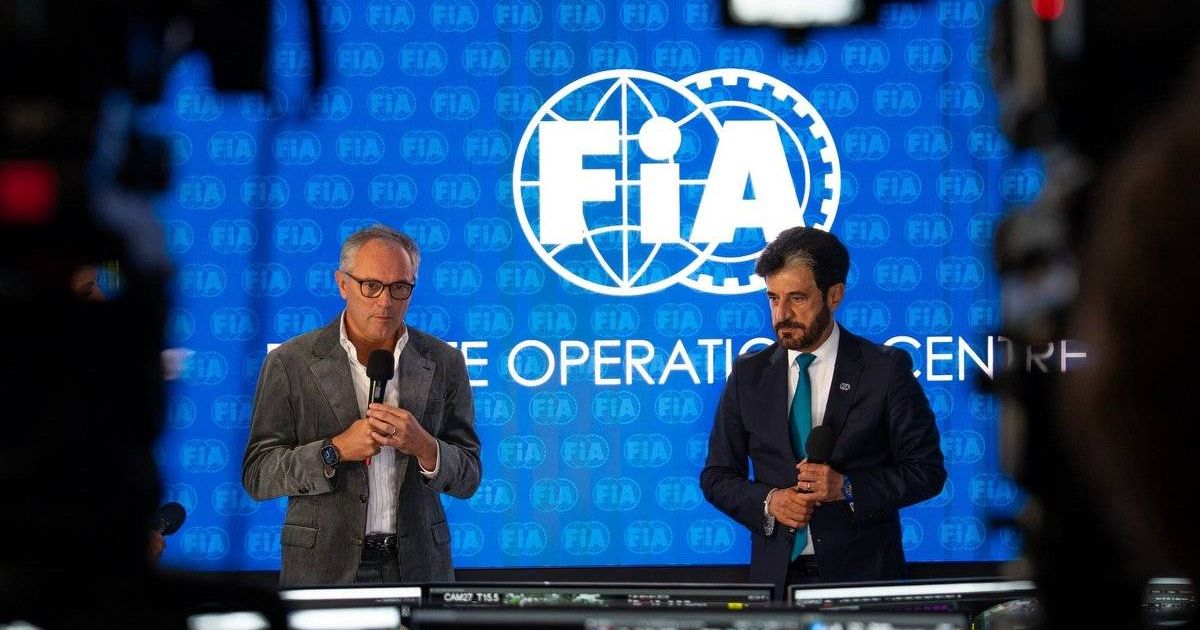
    Monitoring Infringements from Afar

    Pit wall strategists constantly calculate time deltas, tire degradation, and track position, but officiating interventions often introduce the biggest variables into a grand prix. During the 2026 season, after entering operation at the Dutch Grand Prix and marking an official ceremony in October, an initiative where the FIA opens new Biggin Hill Remote Operations Centre facilities expanded remote technical monitoring across Formula 1, F2, and F3 race weekends. With capacity for up to 16 remote staff reviewing more than 140 video and audio feeds, car-positioning telemetry, and automated team radio tags, the facility screens potential sporting violations like track limits, jump starts, and pit lane infractions.

    The Strategic Impact of Stewarding Delays

    For a strategist, the speed and predictability of a penalty decision dictate whether a driver should pit immediately or build a gap on circuit. A five-second penalty served at a scheduled pit stop merely adds stationary box time, whereas a penalty resolved late in a race may force an aggressive push to open a gap against pursuing cars, accelerating tire wear in the process. The FIA notes that automated computer vision tools flag incidents to assist stewards rather than replace human judgment, though the governing body has not released comparative data demonstrating whether decision times have measurably changed.

    Managing Track Position Against Penalty Risk

    Teams weighing whether to risk an overtaking move close to track boundaries or release a car tightly from a pit box must factor in how quickly investigations are launched. When monitoring systems flag potential pit lane or positional offences promptly, teams gain clearer visibility on whether track position can be legitimately defended or if a counter-strategy must be planned to absorb a time penalty before the chequered flag.

    Official reference: FIA's announcement.