Sunday, 1 November 2026

How Drop-Score Rules and Points Management Shape Championship Deciders

By: Pete Davidson On: 05:27
  • Share The Gag
  • Editorial illustration of an abstract motorsport news graphic for ERC: Titles and pride at stake on season showdown

    Strategic Trade-offs in Points Protection

    When watching a season-ending rally where the overall title has already been secured, the tactical focus shifts from all-out stage victories to calculated point protection. In the 2026 European Rally Championship decider at Rally 6 Cities North of Portugal, the strategic contest for second place centered on net point accumulation rather than outright event pace. Andrea Mabellini entered with an eight-point margin over Miko Marczyk, but the underlying arithmetic involved dropped scores: Marczyk faced discarding his lowest result—currently seven points—whereas Mabellini carried no deduction into the final round.

    This scoring asymmetry created distinct operational priorities for each competitor. For a driver holding the advantage under these regulations, pushing for individual stage wins often introduces unnecessary retirement risk, especially across 181.10 competitive kilometres of gravel featuring a crowded 31-car Rally2 field. In the ERC Portugal finale: Mabellini held the mathematical high ground where tracking his rival and managing finishing positions offered a more reliable return than risking mechanical damage or an accident, particularly given past gravel retirements and potential late-October weather variability.

    Balancing Outright Pace Against Season Objectives

    From a tactical perspective, competitors often assess whether the reward of an event win outweighs the commercial and competitive value of securing a championship position. As competitors in the category have noted, securing the runner-up spot provides tangible value for sponsors and long-term programs, altering how crews approach risk management throughout the weekend. Instead of over-committing to bridge small stage-time deficits against event specialists, crews in close points battles must weigh track position and tyre preservation strictly against the rival they need to beat.

    Similar strategic calculations emerge in team rivalries where teammates battle for the same title, such as the Opel Junior contenders fighting for Junior ERC and ERC4 honours. When intra-team battles unfold, stage strategy often hinges on avoiding mutually destructive pacing while monitoring class competitors to ensure consistent point collection through to the final time control.

    Official reference: FIA’s event preview.
    Managing Brake Heat and Cooling Trade-offs in Grand Prix Racing

    By: Pete Davidson On: 02:56
  • Share The Gag
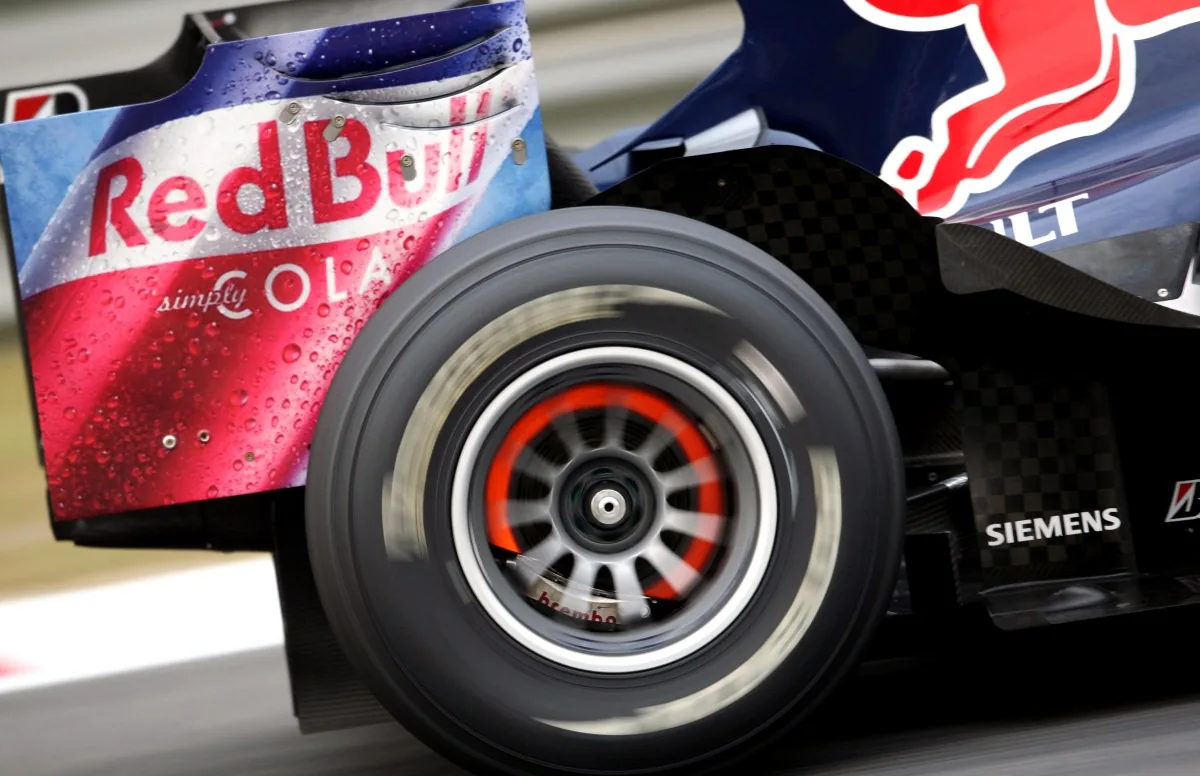
  • Close-up of a Red Bull-liveried Formula 1 car’s wheel, showing a red-orange glowing brake disc behind the blurred spokes.

    The Origin of Glowing Discs

    Spectators watching cars decelerate into heavy braking zones often notice incandescent wheel hubs. The question of Why F1 brake discs glow red comes down to extreme thermal generation, where fierce friction between the brake pads and the carbon-carbon discs heats the surface sufficiently to emit visible light. While peak disc temperatures have historically been reported to exceed 1,200°C under severe conditions, glowing can start at lower thresholds, such as around 600°C in endurance racing comparisons, becoming more prominent as temperatures rise above 1,000°C.

    Balancing Temperature Limits and Wear

    A visible glow does not indicate an emergency or imminent component failure on its own. Racing brakes perform poorly when cold and require high temperatures to work effectively, so teams cannot aim for maximum cooling. However, when heat dissipation fails to match prolonged demands, excessive temperatures accelerate disc and pad wear while reducing braking efficiency.

    Ventilation holes drilled directly through the discs help shed this intense heat. From a tactical perspective, managing that cooling airflow represents an ongoing compromise: opening up ventilation ducts preserves stopping power and prevents accelerated wear across a stint, but teams must balance those cooling requirements against the operating window necessary for the carbon material to bite effectively.

    Official reference: Formula 1 official news and results.

    When Race Tactics Cross Into Scandal: What History Shows About Strategic Manipulation

    By: Pete Davidson On: 01:15
  • Share The Gag
  • Three dark helmet symbols numbered 1, 2 and 3 beside the text “Top 10 Most Controversial F1 Drivers of All Time (2025 Edition)” on a cream background.

    The line between aggressive tactics and regulatory breaches

    In Formula 1, pit-wall strategies routinely seek to exploit safety car periods, track position, and regulatory boundaries to gain an edge over rivals. However, motorsport history reveals stark trade-offs when competitive aggression or tactical planning moves past acceptable limits into deliberate disruption. Compilations examining driver reputations, such as GamerKoala's Top 10 Most Controversial F1 Drivers of All Time (2025 Edition), reflect how actions spanning decades continue to define public perceptions of competitive fairness.

    A clear example of this dynamic appeared in the 2008 Singapore Grand Prix, where Renault instructed Nelson Piquet Jr. to crash deliberately. The resulting safety car period directly assisted Fernando Alonso in securing a race victory. While Alonso benefited from the tactical timing of the pit stops, sources note that capitalizing on that sequence does not establish that he personally orchestrated or possessed advance knowledge of the plot, illustrating how team-level decisions can complicate the reputations of the drivers who drive for them.

    Championship stakes and deliberate track position battles

    Title-deciding races have also tested the boundary between defensive track position and unsportsmanlike interference. In the 1997 season finale, Michael Schumacher faced championship disqualification following a collision with Jacques Villeneuve that commentators and officials judged to be intentional. Similarly, the 1989 and 1990 Japanese Grands Prix featured decisive collisions between Ayrton Senna and Alain Prost, with Senna later acknowledging that their 1990 crash was deliberate retaliation.

    Whether involving safety car timing, extreme defensive moves, or protests, these episodes demonstrate that while radical strategies can influence a single grand prix or championship outcome, they carry severe regulatory and reputational consequences that linger far beyond race day.

    Official reference: Formula 1 official news and results.

    Saturday, 31 October 2026

    How Formula 1 Timetables Balance Track Engineering with Media Obligations in Austin

    By: Pete Davidson On: 22:25
  • Share The Gag
  • Editorial illustration of a stylised microphone and speech bubbles for United States GP: Newey, McNish and Budkowski named for Friday press conference

    Fitting Team Leadership Between Crucial Track Sessions

    Formula 1 race weekends require teams to balance rigorous track engineering programmes with formal media commitments mandated by the governing body. During the 2026 United States GP: Newey, McNish and Budkowski appeared on the official FIA schedule to represent Aston Martin, Audi and Cadillac respectively in the Friday team principals and technical personnel conference. This hour-long slot was set for 14:30 local time in Austin, placed neatly between opening practice which concluded at 13:30 and the second session beginning at 16:00.

    For engineers and strategic directors, allocating time away from telemetry debriefs during the middle of Friday requires meticulous garage workflow management. Technical leaders must evaluate setup directions and initial tyre degradation metrics from the opening hour of running, yet attend mandatory 60-minute media briefings before cars return to the circuit for key long-run simulations.

    Results-Driven Weekend Media Schedules

    While Thursday and Friday appearances are determined beforehand, Saturday and Sunday media obligations depend strictly on track outcomes. Following qualifying at Circuit of the Americas, the three fastest drivers are allocated to the official media room, while Sunday mandates an immediate post-race debrief for the top three podium finishers.

    Official reference: FIA's announcement, dated 21 October.

    How MotoGP Restarts Reshuffle the Grid and Pit Lane Strategy

    By: Pete Davidson On: 19:34
  • Share The Gag
  • Editorial illustration showing a red flag on a dark pole within a rounded beige panel, with a MotoGP restart rules title to the right.

    The Lap Thresholds That Dictate Race Resets

    When red flags interrupt a Grand Prix, team pit walls face an immediate strategic calculation based on how many laps the leader officially completed. Under the governing 2026 regulations, completing fewer than three laps voids the opening stint entirely, wiping away early overtakes and resetting the grid back to the original qualifying order for a fresh race reduced by one lap. However, if the leader has logged at least three laps without reaching the rounded-down three-quarters distance mark, the race is suspended rather than scrapped. In that scenario, only classified riders from that initial segment can take the restart, lining up based entirely on the interrupted classification order.

    Pit Lane Requirements and Machine Setup Opportunities

    Red-flag interruptions also prompt high-stakes decisions around machine preparation and equipment recovery. To remain eligible for a restart following three or more completed laps, riders must have been actively competing at the moment of the stoppage and must enter pit lane with their motorcycle within five minutes of the signal. If a rider was one full lap down in the interrupted standings, regulations dictate they must take the restart from pit lane, while anyone two or more laps down is barred from restarting. Because teams are explicitly permitted to repair machines, switch bikes, and refuel before the second segment begins, crews must weigh whether quick setup changes or fresh machinery will offset the sprint-like nature of the shortened remaining distance.

    Points Consequences When Races Cannot Resume

    Strategic priorities can shift dramatically when adverse track conditions threaten whether racing can resume at all. Understanding MotoGP red flag restart rules helps fans evaluate why certain front-runners defend positions aggressively right up to an interruption. If three or more laps were logged but worsening weather halts the event permanently, the interrupted order stands as the final classification. Teams are awarded half points if completed leader laps sit below the rounded-down fifty percent threshold of the original distance, while reaching or crossing that halfway mark awards full championship points without any further racing.

    Official reference: official red flag guide.

    How Yellow Flag Restrictions Shape MotoGP Race Strategy and On-Track Moves

    By: Pete Davidson On: 16:33
  • Share The Gag
  • Illustrated yellow flag on a dark pole in a rounded beige panel, with a heading to the right.

    The Overtaking Ban and the Immediate Give-Back Choice

    Spotting a yellow warning board or waved flag forces a rider into an immediate strategic calculation. Under the FIM regulations, riders must slow down, proceed with caution, and hold position throughout the controlled zone. Crucially, the restriction does not lift merely once a rider clears the crashed bike or debris; the ban remains in effect until the exact point where a green signal is displayed. Committing to an overtake into a braking zone where a warning has just appeared risks unraveling a rider's entire race if race control intervenes.

    When a pass does occur under caution, the offending rider faces an immediate tactical choice under the MotoGP yellow flag overtaking rules. If the rider realizes the error immediately, they can avoid disciplinary action by intentionally conceding the position back to every competitor overtaken before race direction intervenes. Hesitating leaves the sanction entirely in the hands of stewards, as the rule does not define a single fixed penalty type or duration for an illegal overtake.

    Managing Track Position and Penalty Windows

    Yellow flags also introduce operational hurdles for riders already carrying sanctions like a Long Lap penalty. Regulations prohibit serving a Long Lap penalty route if yellow flags are active across the penalty loop. When that designated lane becomes unusable due to trackside hazards, extra laps are added to the rider's compliance window, allowing teams to adjust their pit-board communications and avoid compounding infractions.

    During non-race sessions like practice and warm-up, the strategic focus shifts entirely to clean track execution. Passing an active yellow light panel or flag automatically voids that lap time regardless of whether an overtake took place, preventing riders from setting qualifying benchmarks through hazardous sectors.

    Official reference: danger ahead beside the track.

    How MotoGP Blue Flags Impact Traffic and Race Strategy

    By: Pete Davidson On: 13:33
  • Share The Gag
  • Editorial illustration with a blue flag in a rounded beige panel on the left and a heading on the right.

    Lapping Duties and Pack Tactics

    Managing track position when falling a lap behind introduces delicate tactical dilemmas for backmarkers and leaders alike. Under the MotoGP blue flag rules, a rider being lapped must allow every lapping bike past at the earliest opportunity, rather than yielding only to the race leader. Furthermore, overtakes between members of a lapped pack are expressly prohibited while the blue signal is active. Because the regulatory wording does not mandate a set number of corners or an exact maneuver for stepping aside, front-runners often face uncertain closing speeds, while lapped competitors must carefully time their surrender of the racing line to avoid squandering their own track position.

    Managing Track Position Across Different Sessions

    The obligations tied to the blue flag extend beyond race day to shape weekend planning in practice and qualifying. During free practice, receiving the signal requires a competitor to let faster machinery through and avoid impeding rivals by idling along the optimum line. At pit lane exit, a dedicated signalling post flashes blue to alert blending riders of high-speed track traffic bearing down, placing the onus on the exiting machine to merge safely without disruption.

    The Final Lap Flag Combination

    Strategic confusion occasionally surfaces at the conclusion of a race when leaders catch slower traffic right at the stripe. When backmarkers closely precede the leader on the final lap, marshals display the blue and chequered flags at the finish line simultaneously. In this scenario, the leader takes the win and concludes their run, but the preceding riders have not completed their full race distance and must circulate for one final lap before taking their own chequered flag.

    Official reference: MotoGP’s official flag guide.